



Blatant Signs Your Turbocharger is Failing (And When to Replace it)
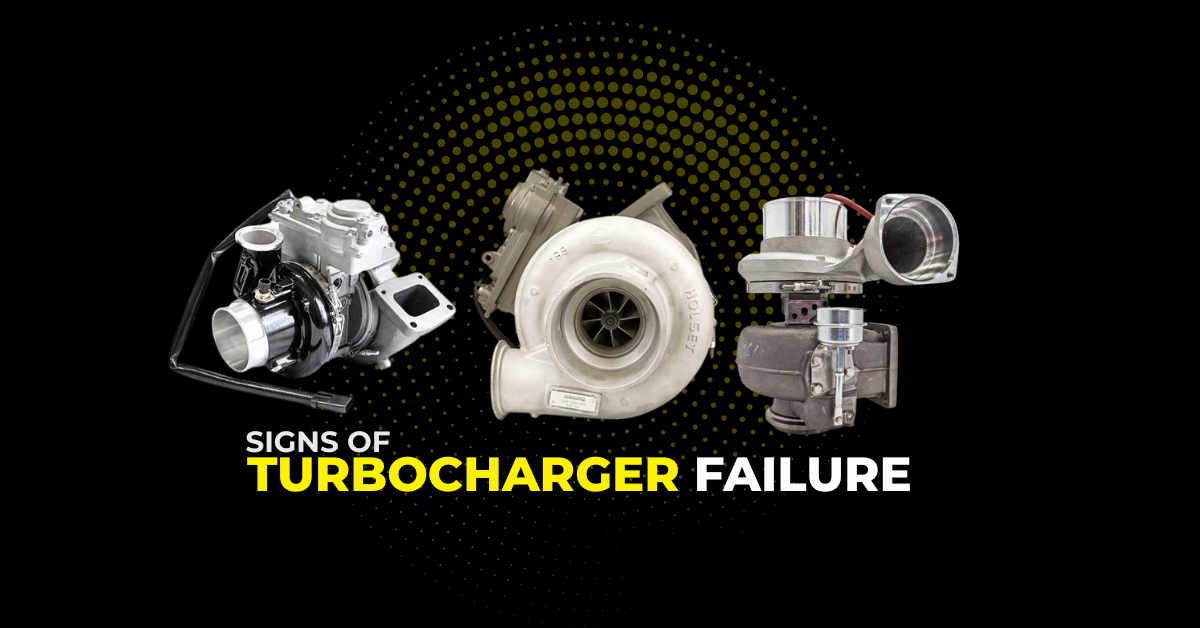
If your semi truck turbocharger is failing, you'll encounter a few common signs.
In this post, we'll cover what those are, and similar symptoms that aren't actually the turbo, but a related part.
Signs the Semi Truck Turbocharger is Failing
Loss of Power: The truck struglges on grades, loses mid-range power, responds poorly to throttling, and takes longer to recover speed after shifting gears.
Unusual Smoke: The exhaust smoke changing colors is a big warning sign.
Rising Oil Usage: The turbo requires more and more oil consumption.
Strange Turbo Noises: Instead of the normal smooth spooling sound, the turbo may produce a sharp whistle, a high-pitched "dentist-drill" whine, a screech, or a metallic grinding and scraping noise.
Boost-Pressure Issues: Overboost can result in erratic boost pressure and throttle, and give off specific engine fault codes.
Visible Oil Leakage: Wet oil film or residue inside of the copmressor, CAC plumbing, or the turbine side.
Sometimes It's Not the Turbo
According to BorgWarner, these symptoms are NOT always due to the turbo itself.
The root cause can be something else: clogged air filters, charge-air cooler leaks, exhaust impedements, fueling issues, crankcase vent problems, and oil-supply issues that can create the "turbo failure" symptoms we're describing.
What Drivers Usually Complain About
"The truck feels lazy," is something you'll commonly hear.
The turbo isn't able to build a normal amount of boost; this makes the engine power feel flat, take longer to pull, and struggle to accelerate on steep climbs.
Common Reasons Why Turbos Fail
The turbocharger spins at very high RPM, so when there's a lack of lubrication, the bearings and seals can wear down quickly.
Watch for These Problems Early On
- Changes in turbo sound.
- Changing color of exhaust smoke.
- monitor boost levels and EGTs.
- Scan for codes that signify trouble.
- Inspect the connector boots and charge pipes.
- check for oil residue.
- inspect the compressor wheel activity.
- If the turbo is blown, don't keep driving - it could damage the engine.
Recap: The Basics of What a Turbocharger Does
A turbocharger uses exhaust gas to spin a turbine that compresses incoming air, allowing the engine to burn more fuel efficiently and produce more power.
In diesel vocational pickups and highway semi trucks, this helps improve torque, fuel efficiency, towing strength, and performance under load or at altitude.
Here's how it works:
- Used-up air power: When the engine burns fuel, it creates hot, used-up air called exhaust. Usually, this air just gets released out the tailpipe and its energy is wasted.
- Turbo's clever trick: A turbocharger is like a special windmill hooked up to the exhaust pipe. It catches that rushing, used-up air before it leaves.
- Spinning power: The force of the exhaust air makes a wheel inside the turbo spin super fast, like a windmill in strong wind.
- Fan power: This spinning wheel is connected to another wheel on the other side of the turbo. This second wheel acts like a powerful fan.
- Air boost: This fan sucks in fresh air and squishes it, making it cooler and packed with more oxygen.
- Engine gets a treat: This boosted, oxygen-rich air is then pushed into the engine. More oxygen means the engine can burn more fuel and make more power!
Sign #1: Exhaust Haze Turns to Black or Blue Smoke
When normal exhaust haze changes to black smoke, it means there's not enough air for the amount of fuel that is getting combusted.
This happens when the engine takes fuel and expects the boost to come, but there isn't enough air to keep up with it.
It might be due to the compressor being dirty or damaged, or a leake in the intake/CAC air path.
Blue smoke is more serious. The oil is moving into the turbo intake or exhaust stream, and getting burned.
This occurs when turbo bearings and seals are worn down, or when the oil drain is blocked, or if coke/sludge accumulates within the center turbo housing.
On the outside, it looks like blue-gray smoke during idle, takeoff, and after a long downhill drive period. Ultimately this leads to bearing damage, clogged oil feed/drain lines, and a crankcase vent issue.
Sign #2. Loud Whistling or Screeching Turbo Sounds
A damaged compressor wheel can cause a high-pitched whine, grinding, scraping, siren-like noise, or unusual hissing under heavy payloads. This occurs while also reducing boost and detering engine performance.
If the sound changes from a normal turbo whistle to a harshwer high-pitched shriek, it often means there is wheel damage, shaft imbalance, or a worn-out bearing.
Oil leakage at the turbine or compressor, and high oil consumption is among the top turbo failure symptoms.
Sign #3. Erratic or Excessive Boost Pressure
Sometimes it's not low boost pressure, it's really high or really erratic, unusual throttle pressure.
It might mean that you have:
- Damaged housing flap
- Faulty control valve
- stuck wastegate
Sign #4: Excessive Oil Consumption & Visible Oil Residue
The truck uses noticeably more oil between regular services without any obvious external leaks on the engine.
Mechanics may find oil in places it shouldn't be, such as a wet oil film or heavy residue inside the compressor housing, charge-air cooler (CAC) plumbing, or turbine side.
Sign #5: Visible Shaft Damage & Vibration Upon Inspection
If the rotating assembly (compressor or turbine wheel) is damaged, it can cause shaft imbalance, noticeable vibration, and visible shaft play, which quickly leads to catastrophic mechanical failure.
How to Extend the Turbocharger's Life Cycle
- Regular oil changes and filter changes
- Use the right oil
- Keep the air filter clean
- Check for leaks
- Warm the engine before heavy long-haul use
- Allow the turbo to cool down after towing or driving with huge payloads
- Avoid excessive operation in extreme temperatures
- Reduce long idle periods on the VGT-equipped diesel turbos
The Best Replacement & Performance Turbochargers at 4 State Trucks
1. Affordable BESTfit OE Replacement Turbos
Our BESTfit Cummins turbochargers are ideal for pre-emissions engines (N14, ISC, B-series).
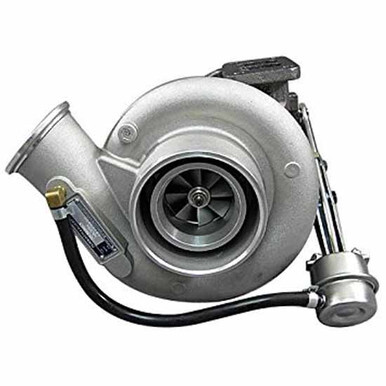
BESTfit turbos aren't performance enhanced, but get you back on the road with a reliable replacement (great for replacing aging, classic big rigs).
Small-frame Holset-style turbos (like the HX35/HX40 variants) are found in medium-duty work trucks, not heavy duty Class 8 highway trucks. We sell these as an affordably-priced replacement (approximately $369 and up).
We stock replacement turbos for the Cummins C Series (8.3L ISC), a mid-range replacement option most common in medium-duty vocational trucks.
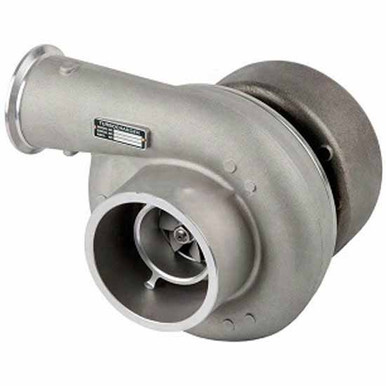
We also stock Cummins ISX (for Holset HE400/HE451 variants) that's non-VGT, and a Cummins N14 (Classic Holset HT60/HX60 platform) if you're looking to rebuild a classic truck that's pre-EGR (made before 2002).
Caterpillar Applications
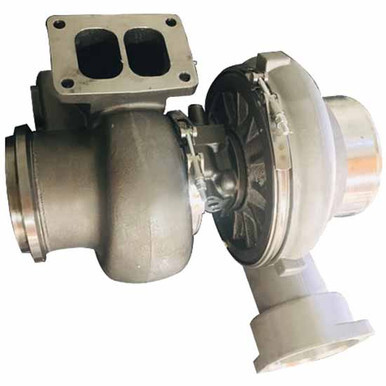
Budget-friendly alternative to OEM BorgWarner Turbos for CAT 3406E / C15 engines:
- Matches the BorgWarner S410 / S400 family
- Fixed geometry (non-VGT)
- Designed for 475–550 HP range
Detroit / International Applications
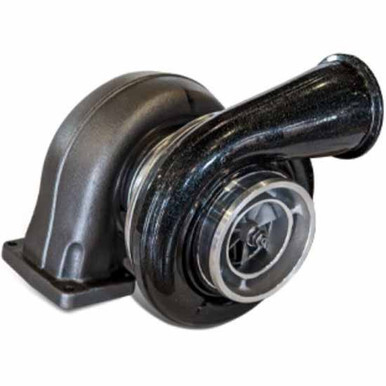
Applies to the Detroit Series 60 12.7L turbos (crossovers to Garrett / BorgWarner); these are often used in DDEC III/IV engines:
- Journal bearing
- Non-VGT
- Extremely common fleet replacements
2. Mid-Tier OE, BorgWarner, Holset Turbos
If you need a true OEM-equivalent, look at these options.
Cummins ISX
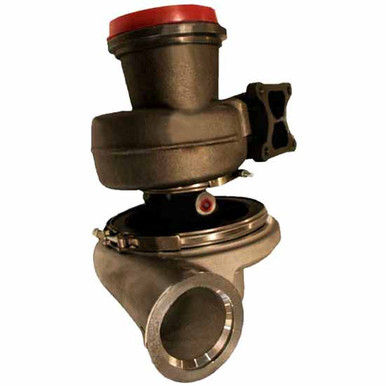
Detroit Series 60
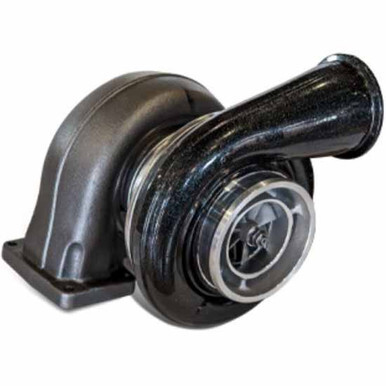
International MaxxForce / DT466
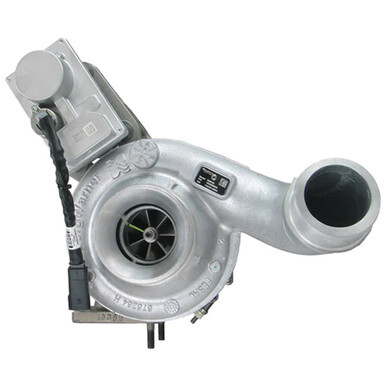
3. High-Performance, Staged, Big Single Turbos
Staged Turbo Systems (Switchblade & Bully Dog Turbos)
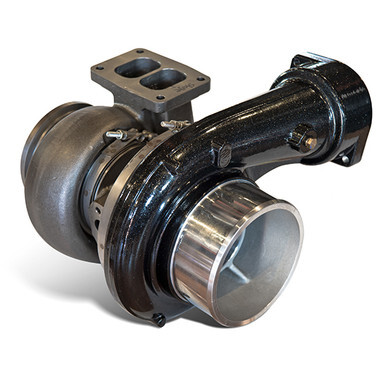
Single-stage Bully Dog turbochargers serve as a standard, efficient replacement for an OEM turbocharger that has failed.
Big Single Turbos (S480/S400SX4)
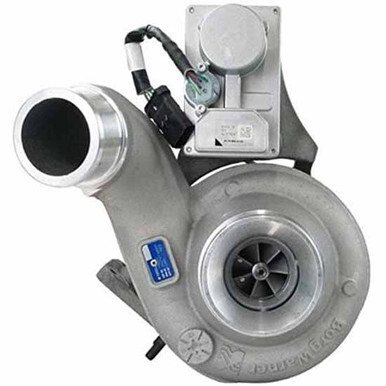
Twin Wastegate and Compound-Ready Turbos
These aren't plug and play. They need:
- ECM tuning
- Fuel system upgrades
- Proper EGT management
Sensors & Supporting Turbo Hardware
Find Boost / Pressure Sensors
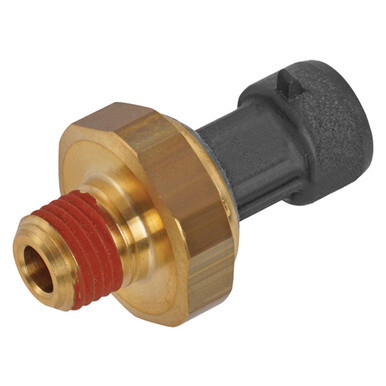
Replacements are for:
- CAT: 2482165 / 2746718
- Mack/Volvo: boost sensors for D11, D13, MP8
Failure Symptoms Include:
- Low power
- Incorrect boost readings
- Poor fuel economy
Oil Feed / Drain Lines
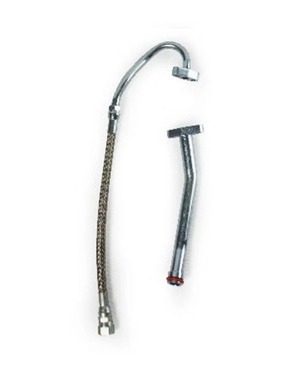
Remember: Most turbo failures are due to low oil or contaminants.
Speed Sensors (ISX, Detroit, Freightliner)
- Monitor the turbo RPM
- Protect against overspeed failure
Avoid the Big Buyer Mistakes When Replacing Turbochargers
Don't mix VGT with non-VGT turbos, or performance and stock fueling setups.
Doing so leads to poorer spool up, potential engine damage, and the check engine light coming on.
Shop for a Performance or OEM-Replacement Turbocharger at 4 State Trucks
Explore our in-stock array of replacement turbos and turbocharger components, from oil drain tubes and V-band elbows with O-rings and clamps to speed sensor connectors. Find everything you need to get back on the road. Download the 4 State mobile app for convenience.
Recent Posts
-
Haul of Fame: Equipment Express's "Doc Holliday” A 2007 Peterbilt Legacy 379 Built to Legend
 Why "Doc Holliday" Earns a Spot in the Haul of Fame Every now and then, a truck rolls through that s …14th May 2026
 -
How to Choose the Right W990 Drop Visor
 The best Kenworth W990 drop visor depends on your design preference, mounting configuration, and win …14th May 2026
 -
How to Quiet Your Cab: Best Noise Reduction Tips
 Excess road noise entering your cab space ruins your quality of life on the road. Thankfully, it's a …8th May 2026
 -
Maximizing Storage Capacity with Bawer Tool Boxes
 If you need to maximize the storage capacity of your semi truck, adding a new set of Bawer Tool Boxe …6th May 2026
 -
Buyer's Guide to Chrome Stack Tops on a Semi Truck
 Adding aftermarket chrome exhaust stacks and stack kits lets owner-operators replace worn exhaust pa …1st May 2026
 -
Buying Bully Dog? 5 Useful Facts About Their Heavy Duty Diesel Performance Parts
 Bully Dog prides itself in heavy duty diesel performance parts that boost airflow, exhaust efficienc …29th Apr 2026
 -
Painted vs. Stainless Visors for Semi Trucks | 4 State Trucks
 Painted vs. Stainless Steel Truck Visors: Which Is Better? Choosing the right semi truck sun visor i …28th Apr 2026
 -
Why Drivers Trust MHC Kenworth for Uptime, Service, and Long-Term Support
 MHC Kenworth doesn't just sell heavy duty trucks and truckp parts, it prides itself in having the la …21st Apr 2026
 -
Semi Truck Exhaust Manifold Buyer's Guide
 This guide covers everything you need to know about aftermarket semi truck manifolds, alongside usef …17th Apr 2026