



Blatant Signs Your Turbocharger is Failing (And When to Replace it)
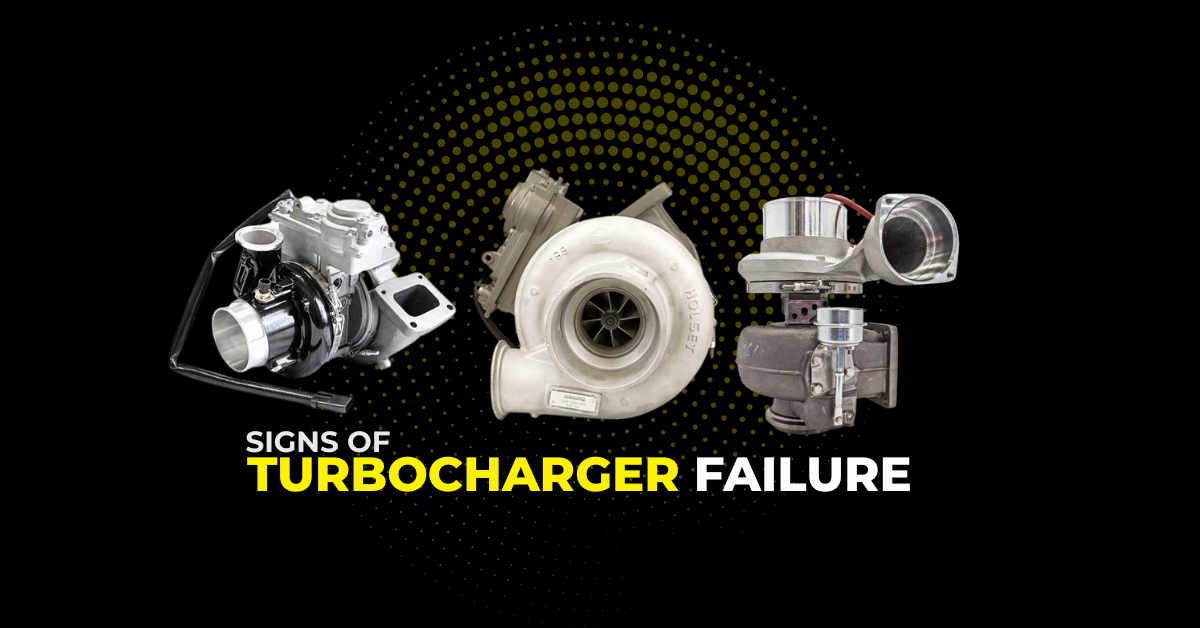
If your semi truck turbocharger is failing, you'll encounter a few common signs.
In this post, we'll cover what those are, and similar symptoms that aren't actually the turbo, but a related part.
Signs the Semi Truck Turbocharger is Failing
Most signs don't indicate that something is going bad.
The damage has already occurred:
- Zero recovery after shifting gears
- Loss of power or sluggishness
- High-pitched grinding sound
- Increased oil consumption
- Clogged DPF due to poor combustion and regen
Common Reasons Why Turbos Fail
The turbocharger spins at very high RPM, so when there's a lack of lubrication, the bearings and seals can wear down quickly.
Grinding Noise - Failed Bearings
If the turbo is making noise, you are well past the point of no return. It has already failed.
We're not talking about the normal high-pitch whistle from a turbo running at 20,000 RPM.
This is a loud grinding noise.
The grinding sound happens when the bearings are going bad and the RPM is so high that the truck screams down the road.
The turbo siezes up immediately after this sound is heard.
The bearings will go bad when there's not enough oil lubricant. Normally, bearings last the lifetime of the truck.
And even the turbo itself should last you 800k to 1 million miles if you're changing the oil and keeping the bearings lubricated.
How to Inspect it
You can visually inspect it by removing the intake boot off of the turbo (NOT the exhaust - just the boot). This way, you can reach in and feel the excessive wear of the turbine itself. If it's badly worn, you've got bad bearings.
If the bearings go bad, the turbine will wiggle into the housing of the turbo!
Take a flashlight and see if you can spot tiny shiny spots inside of the housing. If you spot them, it's a dangerous sign.
You are shaving metal.
That metal residue enters the intake of the engine and scrapes the cylinder walls. This is more common on older motors that don't see proper maintenance.
Blue Smoke - Burning Oil
Excessive blue-colored smoke out of the pipes means the turbo oil seal is likely bad and now it's sucking oil into the system, pushing out an odd-colored exhaust fume.
You won't notice it driving differently.
But the oil consumption will absolutely increase.
Signs It's NOT the Turbocharger
Most turbos will last the lifetime of your truck. It's not common for these to break down if you take care of the rig.
According to BorgWarner, many "turbo-failure symptoms" are NOT due to the turbo, but a related part.
Charge Air Coolers
Loss of power is the common sign.
Charge air cooler (CAC) failures and hose line breaks are far more common than turbo failures, but are frequently mistaken for turbo breakdowns.
In fact, they get frequently mistaken for a failing turbo.
When a CAC has a crack in it, the turbo builds boost and blows it off in the CAC instead of pushing it back into the air intake.
If you have a boost gauge on the dashboard, you'll spot it with ease.
Let's say you're used to 35-40lbs of boost at a standard, but now it's down to 25lbs of boost; the difference in psi is moving somewhere. It's escaping through the cracked side seals on the CAC, where turbo-oil residue and grease buildup leaks through. This is an immediate loss of power!
CAC Boot
Getting a hole in a CAC boot is extremely common. It leads to a loss of boost pressure from your turbo. It's also cheap and easy to replace.
Why does it break? That rubbery silicone boot is under a lot of intense heat and twisting force as it bends to the frame of the truck. They have a bellows with a spring around it. Over time, the inside cracks and breaks apart.
You lose boost pressure.
Clogged Crankcase Air Breather Vent
The air that is suctioned into the air compressor comes out of the crankcase overhead system. If the crankcase is clogged and there is a lot of pressure coming in, too much oil is forced into the air compressor. This oil bleeds out, making you think the air compressor is bad. It's not. You just need to drain the crankcase breather vent.
This makes you think that the turbo is bad when it isn't.
The oil that gets removed from the turbo isn't pressurized through a tube; it's drained by gravity. If there is pressure in the crankcase, the turbo won't drain. Instead, it's blowing oil past the seals.
Clogged Muffler
Diesel engines hate backpressure.
On older rigs, like the Freightliner FLD (infamous for this issue in particular), old restrictive mufflers would get clogged with soot and crud. This impeded exhaust flow, which meant less air to help the turbo spool up.
The turbo's performance slowed down dramatically.
Thinking of a solution, a lot of drivers would swap out their muffled pipes to clean, straight pipes to solve the problem.
In reality, it was a clogged muffler that needed cleaning. Newer straight-through mufflers don't have this problem as much.
Broken Piston Ring Seal or Turbo Seal Ring
The turbo works by moving air in and out from the hot, pressurized-side that spins a blower fan, to the cold side. There is a seal that separates the two sides.
The backside of the turbo has a V-clamp with a downpipe coming out of it. If that turbo pipe is bad, you lose pressure. This means a weak throttle response. This issue isn't very common, however.
Recap: The Basics of What a Turbocharger Does
A turbocharger uses exhaust gas to spin a turbine that compresses incoming air, allowing the engine to burn more fuel efficiently and produce more power.
In diesel vocational pickups and highway semi trucks, this helps improve torque, fuel efficiency, towing strength, and performance under load or at altitude.
Here's how it works:
- Used-up air power: When the engine burns fuel, it creates hot, used-up air called exhaust. Usually, this air just gets released out the tailpipe and its energy is wasted.
- Turbo's clever trick: A turbocharger is like a special windmill hooked up to the exhaust pipe. It catches that rushing, used-up air before it leaves.
- Spinning power: The force of the exhaust air makes a wheel inside the turbo spin super fast, like a windmill in strong wind.
- Fan power: This spinning wheel is connected to another wheel on the other side of the turbo. This second wheel acts like a powerful fan.
- Air boost: This fan sucks in fresh air and squishes it, making it cooler and packed with more oxygen.
- Engine gets a treat: This boosted, oxygen-rich air is then pushed into the engine. More oxygen means the engine can burn more fuel and make more power!
How to Extend the Turbocharger's Life Cycle
- Regular oil changes and filter changes
- Use the right oil
- Keep the air filter clean
- Check for leaks
- Warm the engine before heavy long-haul use
- Allow the turbo to cool down after towing or driving with huge payloads
- Avoid excessive operation in extreme temperatures
- Reduce long idle periods on the VGT-equipped diesel turbos
The Best Replacement & Performance Turbochargers at 4 State Trucks
1. Affordable BESTfit OE Replacement Turbos
Our BESTfit Cummins turbochargers are ideal for pre-emissions engines (N14, ISC, B-series).
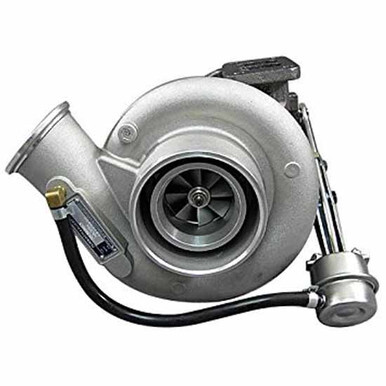
BESTfit turbos aren't performance enhanced, but get you back on the road with a reliable replacement (great for replacing aging, classic big rigs).
Small-frame Holset-style turbos (like the HX35/HX40 variants) are found in medium-duty work trucks, not heavy duty Class 8 highway trucks. We sell these as an affordably-priced replacement (approximately $369 and up).
We stock replacement turbos for the Cummins C Series (8.3L ISC), a mid-range replacement option most common in medium-duty vocational trucks.
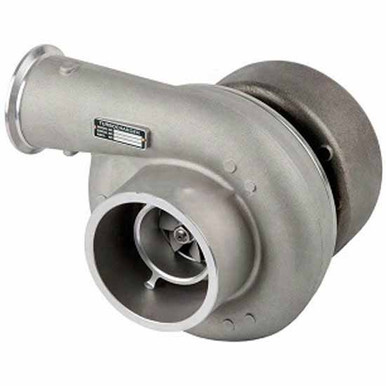
We also stock Cummins ISX (for Holset HE400/HE451 variants) that's non-VGT, and a Cummins N14 (Classic Holset HT60/HX60 platform) if you're looking to rebuild a classic truck that's pre-EGR (made before 2002).
Caterpillar Applications
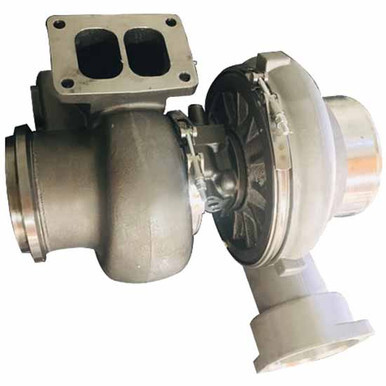
Budget-friendly alternative to OEM BorgWarner Turbos for CAT 3406E / C15 engines:
- Matches the BorgWarner S410 / S400 family
- Fixed geometry (non-VGT)
- Designed for 475–550 HP range
Detroit / International Applications
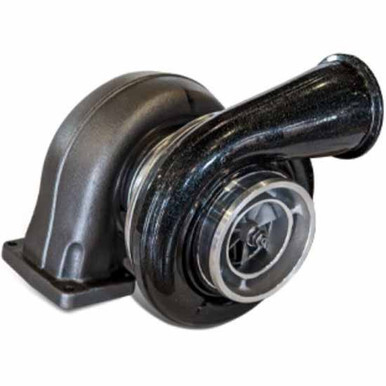
Applies to the Detroit Series 60 12.7L turbos (crossovers to Garrett / BorgWarner); these are often used in DDEC III/IV engines:
- Journal bearing
- Non-VGT
- Extremely common fleet replacements
2. Mid-Tier OE, BorgWarner, Holset Turbos
If you need a true OEM-equivalent, look at these options.
Cummins ISX
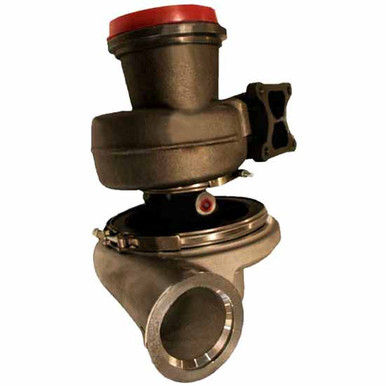
Detroit Series 60
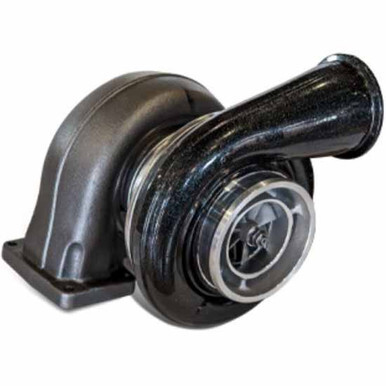
International MaxxForce / DT466
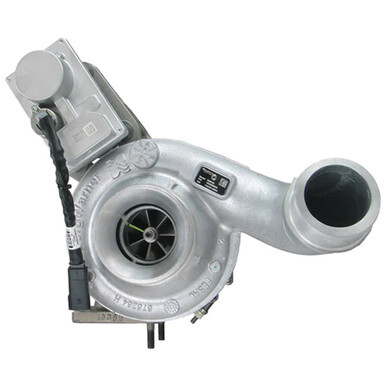
3. High-Performance, Staged, Big Single Turbos
Staged Turbo Systems (Switchblade & Bully Dog Turbos)
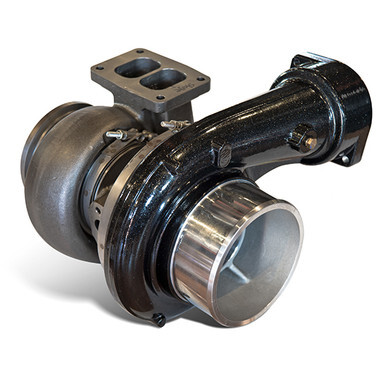
Single-stage Bully Dog turbochargers serve as a standard, efficient replacement for an OEM turbocharger that has failed.
Big Single Turbos (S480/S400SX4)
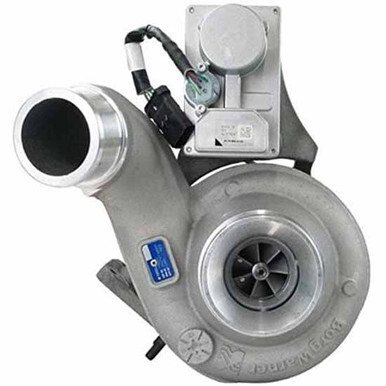
Twin Wastegate and Compound-Ready Turbos
These aren't plug and play. They need:
- ECM tuning
- Fuel system upgrades
- Proper EGT management
Sensors & Supporting Turbo Hardware
Find Boost / Pressure Sensors
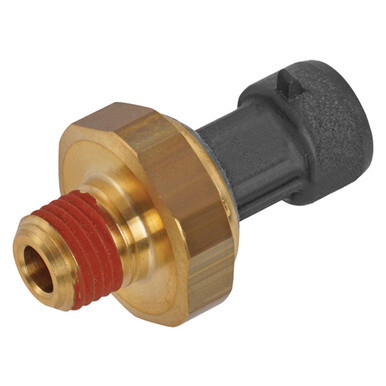
Replacements are for:
- CAT: 2482165 / 2746718
- Mack/Volvo: boost sensors for D11, D13, MP8
Failure Symptoms Include:
- Low power
- Incorrect boost readings
- Poor fuel economy
Oil Feed / Drain Lines
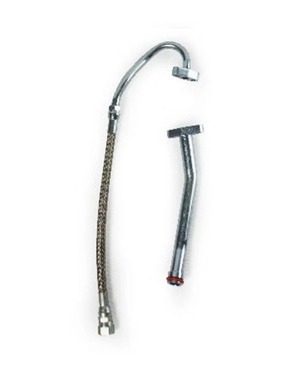
Remember: Most turbo failures are due to low oil or contaminants.
Speed Sensors (ISX, Detroit, Freightliner)
- Monitor the turbo RPM
- Protect against overspeed failure
General Driver Tips for Turbochargers
Get the Right Size of Turbo
A bigger turbo isn't more horsepower. It must be sized for your truck.
A bigger turbo on the same motor creates:
- Huge throttle lag
- Lower horsepower
- Loss of fuel mileage
If it's a 78mm turbo, you don't put a 90mm turbo on it for speed. A smaller turbo means you'll have more throttle response.
Let's say your truck is set at 550hp, get a turbo that matches it.
You should also get the right type of turbocharger to replace your existing setup. Don't mix VGT with non-VGT turbos, or performance and stock fueling setups.
Avoid Overboost
Overboost at low throttle is dangerous to an engine.
Turbos, especially VGT or smaller fast-spooling single turbos, force maximum intake air pressure into the exhaust manifold regardless of the engine's speed.
Driving with a high boost and low RPM will explode the motor.
If you lug an engine under 1500 RPM and you run 40 psi boost at 1300 RPM, it'll lead to catastrophic failure: blown headgaskets, bent connecting rods, cracked piston crowns, and more.
To avoid this, you need to downshift the transmission.
When drivers forget to do this, it's game over.
Shop for a Performance or OEM-Replacement Turbocharger at 4 State Trucks
Explore our in-stock array of replacement turbos and turbocharger components, from oil drain tubes and V-band elbows with O-rings and clamps to speed sensor connectors. Find everything you need to get back on the road. Download the 4 State mobile app for convenience.
Recent Posts
-
What is Dummy Exhaust on a Semi Truck?
A lot of modern Next-Gen semi trucks use horizontal exhaust outlets instead of vertical stacks to ro …2nd Oct 2026 -
Chrome vs Stainless Steel Exhaust Stacks
 Wondering whether to purchase a stainless steel or chrome exhaust stack kit? Here's a breakdown of t …28th Sep 2026
 -
How to Source Semi Truck Parts Online
 Scambling for the right parts at the last minute can get costly. Here are the best tips to consider …25th Sep 2026
 -
Haul of Fame: J&L Contracting's Award-Winning Truck
 Kenworths: Never Satisfied & Devilish Ways When you talk about Midwest trucking, heavy hauling, and …17th Sep 2026
 -
Semi Truck Exhaust Systems: Parts, Materials, Fitment & Repair Guide
 How a Semi Truck Exhaust System Works A heavy-duty exhaust system has three main jobs: route burned …16th Sep 2026
 -
Diesel Truck Engine Maintenance Guide
 Semi truck engines can last up to one million miles, or more, before they need to be rebuilt or repl …4th Sep 2026
 -
How to Buy the Right Peterbilt 379 Radiator
 If you want to keep your diesel engine from overheating you need a well-functioning replacement Pete …28th Aug 2026
 -
10 Essential Cost-Per-Mile Truck Upgrades that Pay for Themselves
 Small aftermarket semi truck accessories and performance upgrades save more money over time than the …21st Aug 2026
 -
Seasonal Semi Truck Maintenance Checklist
 Freezing winter weather temperatures, heavy snow, ice, and road salt take an unseen toll on your sem …14th Aug 2026
 -
Haul of Fame: Richard Bonner’s 1996 Peterbilt 379 — Bringing a Classic Trucker’s Truck Back to Life
 Every truck has a story, but some are worth taking a closer look at. Richard Bonner’s 1996 Peterbilt …14th Aug 2026