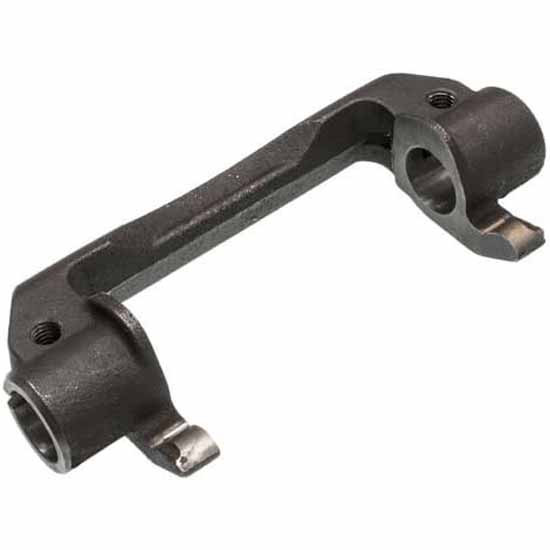
The Volvo WIA Drivetrain product line offers a comprehensive selection of premium drivetrain components for semi-trucks. Built to the highest standards, these parts are designed to provide long-lasting performance and reliability for your Volvo or other leading truck makes. Key features include:
- High-quality universal joints, half-round and full-round, in a variety of sizes to fit your specific application
- Durable differential pinion nuts, locking nuts, and seals for robust driveline support
- Camshaft and input/output shaft replacement parts for smooth, efficient power transfer
- Comprehensive drivetrain hardware like straps, flanges, and hardware for easy installation and assembly
- Advanced differential pressure sensors for critical engine monitoring and performance
Whether you need to replace worn drivetrain components or upgrade to enhance your truck's capability, this product line has the premium parts you can trust to keep your Volvo or other semi-truck running at its best. Invest in quality and experience the difference Volvo WIA drivetrain upgrades can make.
Frequently Asked Questions About Volvo WIA Drivetrain Parts
Which differential ratios are available for my Volvo WIA, and how do I determine what I currently have?
Common differential ratios for Volvo WIA models range from 3.36 to 4.88, with 3.70 and 4.11 being the most popular for highway applications. To identify your current ratio, check the metal tag on your differential housing - it should display numbers like "D40-170" where the last digits indicate the ratio (170 = 3.70). You can also find this information on your door jamb sticker under "Axle" specifications. If tags are missing, count the ring and pinion teeth or rotate the driveshaft while counting wheel revolutions.
Are aftermarket driveshafts compatible with my WIA's transmission and differential, or should I stick with OEM?
Quality aftermarket driveshafts from manufacturers like Spicer, Meritor, and Dana are fully compatible with Volvo WIA drivetrains when properly specified. The key is matching the correct series (1710, 1810, etc.), length, and yoke style to your specific transmission output and differential input. Most WIA models use either SPL or 1710/1810 series u-joints. Aftermarket options often provide better value and availability than OEM, especially for common configurations. Always verify tube diameter, compressed/extended lengths, and yoke compatibility before ordering.
What year ranges and engine configurations affect drivetrain parts compatibility on the WIA?
Volvo WIA trucks from 1995-2000 typically use Eaton-Fuller transmissions with specific bellhousing patterns, while 2001-2007 models may have different spline counts and yoke designs. Cummins ISX engines (common in 2002+ models) often require different flywheel housings than earlier N14 engines. VED12 and D12 Volvo engines have unique bolt patterns that affect transmission compatibility. Always specify your exact year, engine model, and transmission type when ordering clutches, flywheels, or transmission-related components to ensure proper fitment.
How difficult is it to replace U-joints and carrier bearings, and what special tools are required?
U-joint replacement requires a heavy-duty press or large vise, snap ring pliers, and a brass drift. Most experienced mechanics can complete the job in 1-2 hours per joint. Carrier bearing replacement is more involved, requiring the driveshaft to be removed and often needing a bearing puller and press. Common mistakes include improper phasing of u-joints (causing vibration) and incorrect carrier bearing preload. Mark your driveshaft orientation before disassembly and ensure u-joints are aligned in phase. Professional installation is recommended if you lack experience with heavy-duty driveline service.
Why am I experiencing driveline vibration, and which components should I check first?
Driveline vibration in WIA trucks commonly stems from worn u-joints, imbalanced driveshafts, or failing carrier bearings. Start by checking u-joint play - any detectable movement indicates replacement is needed. Inspect carrier bearing rubber for cracks or separation. Check driveshaft balance weights - if any are missing, rebalancing is required. Worn transmission output bearings or differential pinion bearings can also cause vibration. Speed-related vibrations (worse at certain speeds) typically indicate driveshaft balance issues, while load-related vibrations often point to u-joint or bearing problems.