


Buyer's Guide to Chrome Stack Tops on a Semi Truck

Adding aftermarket chrome exhaust stacks and stack kits lets owner-operators replace worn exhaust parts, upgrade the truck’s exterior aesthetic profile, match the right cab/bracket configuration, and create a cleaner custom look with model-specific fitment.
Critical Takeaways for Owner-Operators
Verify truck year, cab style, bracket count, stack height, diameter, and ID or OD connection before buying.
Use reduced-bottom stacks for a larger chrome look without replacing the full 5-inch lower exhaust system.
Choose top-only replacements when existing hardware is sound. Choose a full kit when elbows, spools, clamps, or brackets are worn.
Protect DPF and SCR routing on 2007 and newer trucks. Visible stack upgrades are mainly cosmetic.
Measure total installed height to avoid clearance issues, especially with 8-inch stacks.
Before You Buy: Things to Know
Fitment: Know Your Cab Configuration
A day cab usually has a different bracket setup than a sleeper truck because there is no sleeper structure behind the cab to support the same exhaust layout. Many day cab exhaust kits call for 4 cab brackets, especially on Peterbilt 378 and 379-style applications. That matters. The brackets help stabilize the stacks, control vibration, and keep the exhaust sitting where it belongs after thousands of miles of heat, wind, and road shock.
On a sleeper truck, the exhaust system may mount and route differently along the cab and sleeper area. The stack height, bracket location, spool length, and elbow choice all need to match the body layout. A tall sleeper can visually handle bigger stacks, too. That’s one reason 7-inch and 8-inch stacks often look more natural on long-hood sleepers than they do on smaller day cabs.
Then you have the Peterbilt-specific language: Unibilt and Non-Unibilt.
This is where buyers get tripped up.
A Unibilt Peterbilt uses an integrated cab-and-sleeper configuration. Many Unibilt exhaust kits list 2 cab brackets because the mounting layout differs from older or non-integrated setups. A Non-Unibilt truck may require a different kit entirely, and some Non-Unibilt listings are sold without cab brackets, which means the buyer may need to reuse existing brackets or order mounting hardware separately.
Flat windshield trucks can add another wrinkle, especially with older Peterbilt and classic-style builds. Hood length, cab shape, mirror clearance, visor depth, and stack height all affect the final look. A big chrome turnout may look perfect in a product photo, but on the wrong cab layout it can sit awkwardly, run too tall, or fight the rest of the truck’s proportions.
The Reduced-Bottom "Cheat Code"
A stack can look massive up top and still connect to a smaller lower system. That is the whole idea behind 7-to-5 and 8-to-5 exhaust stacks.
Think of it as a visual upgrade with a practical handshake.
The top of the stack gives you the big chrome look: 7-inch, 8-inch, maybe even that “monster stack” presence that changes the whole side profile of the truck. The bottom reduces to 5 inches so it can mate to common factory-style elbows, mufflers, or existing exhaust hardware.
That is why a buyer can run a big-looking stack without rebuilding every inch of the lower exhaust system.
Now let’s clear up the alphabet soup.
- OD means outside diameter.
ID means inside diameter.
Simple enough, but it matters a lot when you’re trying to slide one exhaust component into another.
- A 7-to-5 OD stack has a 7-inch visible body and a 5-inch outside-diameter bottom connection. That can work with certain muffler or expanded-elbow setups where the stack slides into the mating part.
- A 7-to-5 ID stack has a 7-inch visible body and a 5-inch inside-diameter bottom connection. That can work where the stack needs to slide over a 5-inch pipe or factory-style elbow.
Same visual idea. Different connection.
That tiny ID/OD detail can decide whether the stack fits perfectly or refuses to cooperate in the shop.
The same logic applies to 8-to-5 stacks. You get that big 8-inch chrome presence above the cab, but the lower connection still works with a more common 5-inch system. For owner-operators who want an aggressive show-truck look without turning the entire install into a full custom fabrication project, reduced-bottom stacks can make a lot of sense.
This is the cheat code.
A 7-to-5 miter stack can give a clean custom look without going too wild. An 8-to-5 bull hauler or West Coast turnout can make the truck look huge from the side while still working with 5-inch lower hardware. A reduced-bottom flat top can keep the build clean, simple, and proportionate.
But don’t guess.
Check whether the existing lower system needs an ID or OD connection. Look at the elbow. Look at the muffler. Look at the lower pipe. If you are replacing only the top stack, the bottom connection matters more than the top style.
The Emissions Warning
For older pre-emissions rigs, exhaust upgrades can feel straightforward: elbows, spools, brackets, stacks, clamps, and style.
For 2007+ trucks with DPF/SCR systems, slow down.
The rules change.
On emissions-era trucks, especially those equipped with diesel particulate filters and selective catalytic reduction systems, the visible stacks are often more about appearance than performance. They still matter. They still transform the truck. They still let a driver choose between traditional, old-school, clean custom, or full show-truck energy.
But they do not give you a free pass to alter the emissions system.
Do not modify the piping from the turbo to the aftertreatment inlet. Do not relocate aftertreatment components. Do not assume a bigger visible stack means the whole system flows like a pre-emissions straight-pipe setup.
That is not how modern exhaust architecture works.
On DPF/SCR trucks, the aftertreatment system controls much of the exhaust path before the gases ever reach the visible stacks. So an 8-inch chrome top may deliver a bigger look, but that does not automatically mean a performance gain. In many cases, the upgrade is cosmetic, proportional, and stylistic.
And that’s okay.
A clean set of chrome stacks can still completely change the attitude of the truck.
For a newer Peterbilt 389, 589, Kenworth W900, or other emissions-era build, the smarter move is to shop model-specific exhaust kits designed around the truck’s cab, brackets, aftertreatment layout, and stack position. That is where details like DPF-era fitment, cab-mount exhaust, support brackets, long drop elbows, seals, and spools become more important than just picking the biggest stack on the page.
Big stacks look great.
Compliance matters more.
So before chasing monster stacks on a 2007+ truck, ask the practical questions first: What year is the truck? Does it have DPF/SCR? Is this a top-only replacement or a full exhaust kit? Does the product fit the emissions-era layout? Are you changing only the visible stack section, or are you touching regulated exhaust routing?
Measuring Exhaust Stack Height for Accuracy
The top stack height itself will determine the overall height of the exhaust once it's on the truck.
When you buy a set of chrome stacks or an exhaust kit, only the stack height is measured, not the overall height.
To get the full height, measure from the center of the lower exhaust elbow clamp to the ground and add your stack height to find the total.
Truck models vary, as can their suspension and tire size, both of which affect the elbow clamp-to-ground space. So, the measurement won't be perfect.
Lincoln Chrome Exhaust Stack & Kit Options
Lincoln offers stacks for older and newer truck models, like the Peterbilt 389 (2011 and newer) that include popular designs like Bull Hauler, Goncho, Flat Top, and Miter Cut.
They offer kits for models like the Peterbilt 359 (6", 7", and 8" diameters), and Peterbilt 379 exhaust kits that include 10" diameter exhausts (only available in "long drop" designs).
- Pickett Style Exhaust Kit + One-Piece Elbow & Spool (AKA "Spelbow"): includes all relocation brackets and pipes, but require the DPF unit be moved.
For classic Kenworth aerocab models like the W900A and W900L, Lincoln has 6" and 7" chrome stack kits, and the non-aerocab models like the Kenworth W900B and T880 come with different upper exhaust clamps, a cab bracket and a clamp with a rubber strap in-between.
BESTFit Chrome Stack Tops Options
BESTfit is a jack-of-all-trades brand that offers a plethora of chrome stack top designs and exhaust kit configurations for a broad variety of semi truck make/models.
BESTfit (and TPHD) offer Kenworth Aerocab long-drop exhaust kits in 6", 7", and 8" diameters.
Best Chrome Stack Top Style Designs
Flat Top Chrome Stacks: Traditionalist
They use a straight, level cut at the top, giving the truck a classic working-rig look without extra flash. This style fits drivers who want polished chrome, but still prefer a practical, restrained appearance over wild turnouts or oversized show-truck designs.
On a Peterbilt 379, Kenworth W900, Freightliner Classic, or older vocational truck, flat top stacks say: “I keep my truck sharp, but I don’t need to prove anything.”
They pair well with simple chrome bumpers, polished tanks, clean cab lights, stainless brackets, and modest visors. For trucks parked outside, rain caps are a smart add-on because the open vertical top can catch water and leave soot streaks down the chrome.
8-Inch Bull Hauler Stacks: Big Show
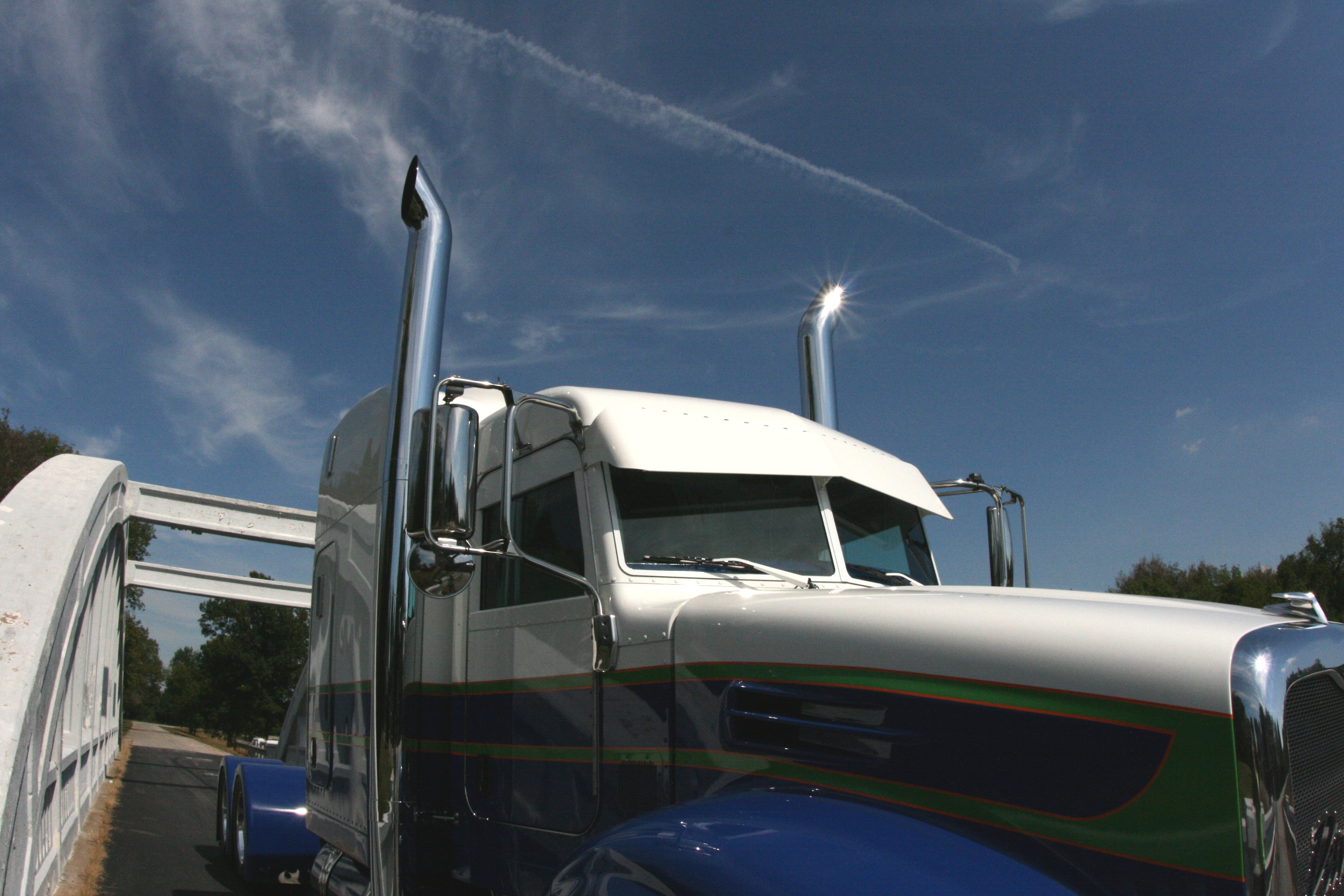
Bull hauler exhaust stack tops have presence.
A 5-inch bull hauler stack keeps the look traditional and practical. It adds custom style without overwhelming the cab. A 6-inch bull hauler gives more visual weight and works well for a first custom exhaust upgrade. A 7-inch bull hauler is where the style really starts to stand out. It looks big, confident, and custom without feeling too extreme on most classic trucks. An 8-inch bull hauler is full show-truck territory. Huge shine. Huge mouth. Huge personality.
Bull hauler tops also work well in reduced-bottom designs, such as 7-to-5 or 8-to-5 stacks. That means the visible stack can look large up top while the bottom connection still mates to a more common 5-inch exhaust setup. For drivers who want a massive look without changing every lower exhaust component, that reduced-bottom setup can be a smart move.
The style does come with a responsibility: the rest of the truck has to support it.
Bull hauler stacks look best when the build has other bold pieces. A plain fleet-style truck with oversized bull hauler tops may look unbalanced. Add a drop visor, polished bumper, stainless cab panels, chrome elbows, rear light bars, and bright mud flap weights, and the design starts to make sense. The stacks become part of a complete custom theme instead of one loud upgrade standing alone.
From a personality angle, bull hauler stacks say the driver likes attention. They suggest confidence, pride, and a little bit of showmanship. The truck does not need to be flashy everywhere, but it needs enough chrome to make those big turned-out tops feel intentional.
West Coast Turn Out Stacks: Old-School

Instead of sending the top straight up, they sweep the exhaust outward. That single curve changes the whole mood of the truck. Suddenly the stacks feel more classic, more highway, more owner-operator.
The West Coast turnout has the strongest old-school flavor. It belongs on long hoods, polished sleepers, vintage-inspired builds, and trucks with deep visors and lots of stainless. It says the driver cares about tradition—but also wants the truck to look like it came from a chrome shop, not a fleet yard.
The curve turnout feels smoother. Less sharp. It gives the truck a rounded custom profile without the more dramatic hook of some West Coast or bull hauler designs.
Turnouts also bring practical benefits.
They naturally shed rain better than open straight-up styles. Since the opening points outward, water has a harder time dropping straight into the pipe. They can also help direct soot away from the cab and stack face, which helps keep the chrome cleaner between washes.
That matters.
A driver who polishes stacks after every trip may not care. A driver who works the truck hard all week probably will.
Best pairing:
- West Coast stacks with bowtie visors
- Curve turnouts with smooth chrome bumpers
- Long drop elbows for a stretched side profile
- Cab lights and marker lights for old-school highway style
- Stainless rear fenders and polished deck plates for a complete look
This driver likes tradition with attitude. He wants the truck to look like it belongs on a poster, a calendar, or parked under the lights at midnight.
Miter Cut Chrome Stacks: Clean Custom
Straight-up stacks have a simple, mechanical look. They rise clean behind the cab and end with either a sharp angle or a level cut.
A miter cut stack uses a diagonal top. It gives the truck a sharper profile and has that classic big-rig silhouette people recognize instantly. On a long hood, it looks crisp. On an older Peterbilt or Freightliner, it feels period-correct. On a clean custom build, it adds just enough edge without overcomplicating the truck.
A flat top stack uses a straight, level cut. It feels cleaner. More restrained. Almost industrial. Flat tops work well when the rest of the truck has a disciplined chrome package: polished tanks, simple visor, clean bumper, straight lines, no extra drama.
Straight-up stacks suit drivers who like symmetry.
They also come with a real-world caveat: rain.
When a truck parks outside, open vertical stacks can catch water. Rain can also mix with soot and leave dark streaking down the stack face, especially if the truck sits often or runs in wet conditions. That doesn’t make miter or flat top stacks a bad choice. It just means outdoor parking demands a little more maintenance.
Rain caps are useful add-on accessory when you get a new set of stacks.
For trucks that endure the elements 24/7, a stainless rain cap or stack cover protects the pipe and reduce the mess. It also gives peace of mind when the truck sits between loads, during bad weather, or over a long weekend.
Best pairing:
- Miter stacks with long drop elbows for a sharper side profile
- Flat tops with polished spools for a clean vertical look
- Rain caps for outdoor parking
- Simple visors and bumpers for a restrained build
- Chrome clamps and clean brackets to keep the install tight
Diablo/Short 30 Turn Out Stacks: Loud and Proud
Diablo and Short 30 turn out stacks bring attitude fast. These are the stack tops for drivers who want the exhaust to look sharp, aggressive, and a little unruly—in the best way. The Diablo style usually carries a slash-cut, hard-edged profile that feels more modern than a standard curve turnout. Short 30 stacks use a tighter, compact turn that kicks outward without the long sweep of a West Coast or bull hauler top.
On a Peterbilt 379, 389, or Kenworth W900 with a deep visor and polished bumper, these stacks can make the truck look mean from the side. The top cut catches your eye first. Then the chrome does the rest. A 7-inch Diablo stack gives the build a sharp custom edge, while an 8-inch Short 30 setup starts pushing into full show-truck territory.
These styles work best when the rest of the rig can keep up. Add a bold bumper, cab lights, stainless mirror brackets, polished tanks, rear light bars, or heavy mud flap hardware. Otherwise, the stacks may become the only dramatic piece on the truck. With the right supporting chrome, though, Diablo and Short 30 stacks look intentional. Loud. Proud. Built to be noticed.
Long-Drop Stacks: Classic Big Rig Look
Long-drop stacks give a truck that stretched, classic big-rig profile. The magic usually comes from the elbow setup. A long-drop elbow creates a cleaner visual line from the lower exhaust system up to the stack, especially on Peterbilt 378, 379, and 389 Glider-style builds. From the side, the exhaust looks longer, smoother, and more deliberate.
This style feels old-school without looking dated. Picture 7-inch chrome stacks rising behind the cab, paired with 90-degree long-drop elbows, polished spools, and a clean T-pipe. The truck suddenly looks taller. Sharper. More complete. A long-drop setup can also help oversized stacks feel less abrupt because the chrome flows upward instead of appearing bolted on as an afterthought.
For the best look, pair long-drop stacks with classic exterior upgrades: a bowtie visor, stainless cab panels, smooth bumper, round watermelon lights, polished deck plate, and clean frame accessories. The style suits drivers who want the truck to look like a real highway machine—not just a catalog build. Long-drop exhaust kits also make sense when old elbows, clamps, or spools already look worn out. Replace the whole visual line, and the truck changes from the cab back.
BESTfit or TPHD Stacks: Customizing on a Budget
BESTfit and TPHD stacks give budget-focused builders a practical way into the chrome exhaust game. The appeal is simple. You can refresh the truck’s look, move into a larger diameter, or replace worn exhaust pieces without jumping straight into ultra-premium pricing.
BESTfit works well for drivers shopping individual stack tops, common replacement styles, and full exhaust kits with strong value. Miter cuts, flat tops, West Coast turnouts, bull haulers, 6-inch kits, 7-inch kits, and reduced-bottom options all fit the budget-builder lane. A driver can start with a pair of stack tops, then upgrade clamps, elbows, spools, and other chrome pieces over time. No need to rebuild the whole truck in one shot.
TPHD fits the same kind of buyer from the full-kit angle. A TPHD chrome exhaust kit can make sense for Peterbilt 378, 379, and 389 Glider owners who want a complete visual upgrade at a more approachable price point. These kits give drivers the big custom look—especially in 6-inch, 7-inch, and 8-inch configurations—while leaving money for other upgrades like cab lights, mud flap hangers, bumper trim, or a fresh visor.
Budget chrome can still look sharp. The trick is consistency. Match the stack diameter to the truck’s size. Keep the elbows clean. Replace rusty clamps. Avoid mixing fresh mirror-finish stacks with dull old hardware underneath. Even a value build can look expensive when the pieces line up.
Lincoln Chrome Stacks: Premium Build
Lincoln Chrome stacks belong on builds where the details matter. The brand shows up heavily in premium exhaust kits, model-specific applications, long-drop setups, quiet kits, 7-inch and 8-inch configurations, Peterbilt 389 year splits, Peterbilt 589 cab-mount options, and classic Peterbilt/Kenworth/Freightliner applications. That range gives serious builders more room to dial in the look.
The appeal goes beyond shine. Lincoln Chrome products often support more specific fitment paths: day cab with 4 cab brackets, Unibilt with 2 cab brackets, Non-Unibilt without cab brackets, cab-mount exhaust, long-drop elbows, OE-style elbows, quiet spools, and reduced-bottom stack options. For a high-dollar truck, those details matter. A premium build should look clean from the lower elbow to the top cut.
Choose Lincoln Chrome when the exhaust becomes part of the truck’s identity. A 7-inch Lincoln Chrome miter stack gives a clean custom look. An 8-inch West Coast or bull hauler setup brings show-lot energy. A 7-inch long-drop kit on a Peterbilt 389 creates that polished, factory-plus appearance owner-operators love. Add a Lincoln Chrome visor or bumper, and the whole truck starts to feel matched.
Premium chrome rewards commitment. Keep the stack style, diameter, elbows, brackets, visor, bumper, lights, and rear accessories moving in the same direction. Clean custom? Use miter or flat tops with polished but restrained exterior pieces. Old-school highway build? Go West Coast or curve turnout with long-drop elbows and classic lighting. Full show truck? Bring the 8-inch stacks, heavy chrome, deep visor, and bold rear lighting.
Chrome Stack Sizes: 5-Inch vs 7-Inch vs 8-Inch Stacks
5-Inch & 6-Inch: The Traditional Look
Some trucks look better with restraint.
A 5-inch chrome stack has that classic working-truck feel. It suits older fleets, restoration builds, dump trucks, vocational rigs, and drivers who want clean chrome without turning the exhaust into the loudest design feature on the truck. It also feels period-correct on many older semi truck exhaust stacks, especially when paired with simple miter cuts, flat tops, or modest curve turnouts.
Quiet confidence. That’s the vibe.
A 6-inch stack steps things up without getting wild. It gives the truck more shine, more side profile, and a little more custom presence. For a first chrome upgrade, 6-inch stacks make sense. They look sharper than tired factory stacks, yet they still work well on day cabs, smaller sleepers, and practical daily drivers.
Picture a clean Peterbilt 379 day cab with 6-inch miter tops, polished elbows, and a simple stainless visor. Nothing looks overbuilt. Nothing feels forced. The truck just looks cared for.
That’s the appeal.
For budget builders, 5-inch and 6-inch custom truck exhaust stacks also leave room for other upgrades. Instead of spending the entire budget on oversized stacks, a driver can pair 6-inch chrome tops with new clamps, cleaner elbows, cab lights, mud flap weights, or a bumper accent. The whole truck gets better.
Best fit for:
- Working fleets
- Older trucks
- First custom upgrades
- Budget-conscious drivers
- Clean restoration builds
- Day cabs with modest chrome packages
Personality read: The Traditionalist or The Practical Customizer.
This driver likes chrome. He just doesn’t need every part on the truck screaming at once.
7-Inch: The Industry Sweet Spot
Seven-inch stacks hit hard.
They make the truck look custom immediately, yet they still work across a wide range of builds. Peterbilt 379s, 389 gliders, Kenworth W900s, Freightliner Classics, show-inspired sleepers, polished day cabs—7-inch stacks can fit the attitude without swallowing the cab.
That’s why 7-inch often feels like the safest recommendation.
It gives enough visual size to separate the truck from a stock setup. It works with miter, flat top, West Coast, curve turnout, bull hauler, and short 30 styles. It also pairs well with reduced-bottom setups like 7-to-5 stacks, where the visible stack looks big while the lower connection still works with common 5-inch exhaust hardware.
Smart move.
A 7-inch miter top gives the truck a clean custom edge. A 7-inch West Coast turnout brings old-school highway attitude. A 7-inch bull hauler starts leaning into show-truck territory without going full monster stack. With the right elbows and brackets, the look feels intentional from the lower pipe all the way to the top cut.
This is the size for drivers who want people to notice—but not stare for the wrong reasons.
Seven-inch stacks pair especially well with:
- Long drop elbows
- Polished stainless or chrome spools
- Stainless cab panels
- Bowtie or reverse bowtie visors
- Classic round cab lights
- Chrome bumper upgrades
- Rear light bars and polished mud flap hardware
Personality read: The Clean Custom Driver.
This driver wants the truck to look sharp from every angle. Bigger than stock. Cleaner than average. Built with taste.
8-Inch: The Show-Stopper
Eight-inch stacks do not whisper.
They dominate.
On the right truck, they look incredible. A long-hood Peterbilt with a deep bumper, tall sleeper, polished visor, stainless rear fenders, and big 8-inch bull hauler stacks has presence before the engine even fires. The stacks become part of the truck’s identity.
The risk comes from proportion. An 8-inch stack needs visual support from the rest of the rig. Heavy chrome stacks look better when the truck already carries other strong custom pieces: a wide bumper, drop visor, bold lighting, polished tanks, stainless brackets, rear fenders, and clean frame accessories. Without those supporting details, 8-inch stacks can feel oversized.
Height matters too.
A tall 8-inch stack can push the truck close to overhead clearance limits, especially when the setup includes long top stacks, tall sleepers, or raised mounting points. Many roads, bridges, shop doors, and loading areas revolve around practical height realities in the 13'6" to 14' range. Before choosing monster stacks, measure the truck’s current overall height, stack mounting point, and desired top length.
Then measure again.
A beautiful set of 8-inch stacks loses its charm fast if it causes clearance problems at the shop door, under low structures, or near loading docks.
Best fit for:
- Show trucks
- Long-hood sleepers
- Peterbilt 389 and 589-style builds
- Kenworth W900 custom builds
- Trucks with heavy chrome packages
- Drivers who want the stacks to become the centerpiece
Black Semi Truck Chrome Stack Tops
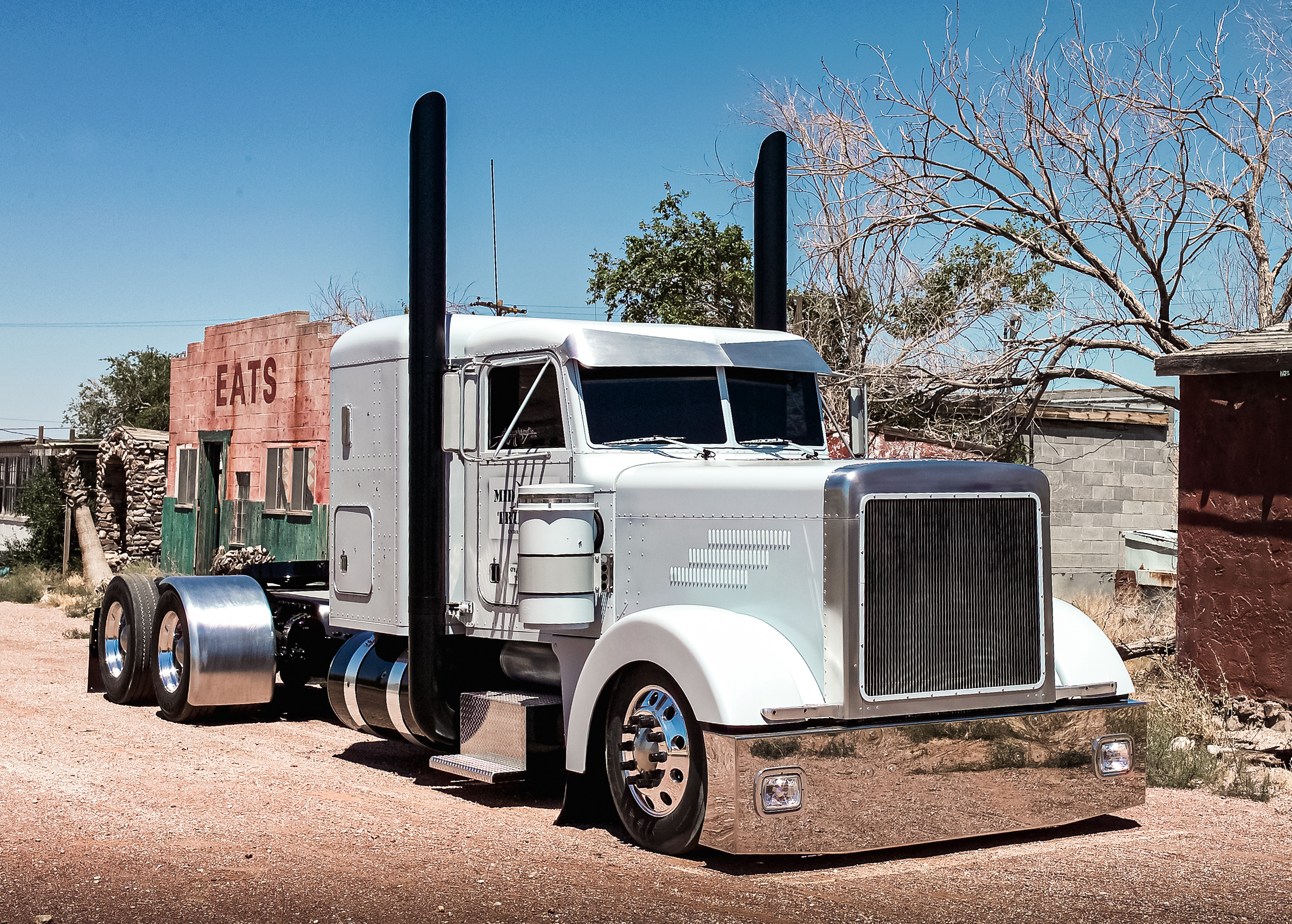
These aren't common, but they look cool on the right rig. Aluminized steel stacks can be specialty painted with a black powder coating for owner-operators who want a truly niche look.
Crafting a Custom Build (Starting with Chrome Stacks)
Stage 1
Replace faded or damaged chrome stack tops with the correctly-configured set. Faded, pitted, or dented chrome instantly makes a hard-working rig look neglected.
- The Reality Check: Even in this basic stage, you cannot just buy any shiny pipe. You must ensure you are getting a "correctly-configured set." This means verifying if your current setup requires a plain bottom, a reduced-to-5-inch OD (Outer Diameter) to slip into a muffler, or a reduced-to-5-inch ID (Inner Diameter) to slip over factory elbows.
- The Goal: Clean up the truck's profile while retaining the factory specifications and avoiding any major plumbing headaches.
Stage 2
Upgrade to miter, bull hauler, or West Coast turn out tops.
- Miter / Flat Tops: Perfect for a traditional, clean, mechanical look. However, you have to accept the reality of the "rain catcher" effect. If the truck sits outside, you'll likely deal with rain pooling and soot streaking down the side of the chrome unless you use caps.
- West Coast / Turn Outs: The sweet spot for highway heritage. They look aggressive but are highly practical, as they naturally deflect rain and direct diesel soot away from the stack face and trailer.
- Bull Haulers: The ultimate "look at me" choice. They push the visual boundary into show-truck territory, demanding attention and a lot of confidence.
Stage 3
Add chrome elbows or spools.
- Elbows: Swapping factory elbows for 50-degree or 60-degree chrome long-drop elbows gives the side-of-cab profile a continuous, mirror-like finish all the way down.
- Spools: Upgrading the spools (the straight sections between the elbow and the top stack) locks in that premium look.
- The Reality Check: If you run the truck hard and are sensitive to cab drone, this is the stage where you should strongly consider integrating quiet spools to keep the noise manageable inside the cab.
Stage 4
Move into a full Lincoln Chrome, BESTfit, or TPHD exhaust kit.
- The Blueprint: A full kit bundles the tops, spools, long-drop elbows, heavy-duty clamps, and the exact brackets required for your specific cab.
- The Reality Check: Fitment is unforgiving here. You need to know your exact cab style (Day Cab, Sleeper, Unibilt, Non-Unibilt) and bracket count. Furthermore, if you are driving an emissions-era rig (2007+), you must ensure your kit respects the DPF/SCR routing. Altering the piping between the turbo and the aftertreatment is a massive compliance and mechanical risk.
Stage 5
Match stacks with visors, bumpers, fenders, lights, and rear light bars.
- Balancing the Mass: If you go big on the stacks, you need to ground the front of the truck with a deep blind-mount bumper and a heavy bowtie or drop visor.
- The Lighting Profile: The truck’s attitude needs to be highlighted. This means complementing the chrome with cab lights, watermelon LEDs, air cleaner light panels, and a matching rear light bar.
- The Goal: Every piece of metal and glass on the exterior communicates the same "old-school," "clean custom," or "aggressive show-rig" theme.
Individual Stacks vs Kits vs Hardware
Top-Only Replacements
Top-only replacements give budget builders a fast visual win.
If the elbows, spools, brackets, clamps, and lower piping still look good, replacing the top stacks can refresh the whole truck. Faded chrome, heat discoloration, dents, scratches, and soot staining can make even a well-maintained rig look worn out. New chrome stack tops fix that fast.
This route works especially well for drivers who already like their current exhaust layout.
Maybe the stack height looks right. Maybe the elbows fit clean. Maybe the brackets sit solid. In that case, swapping to a new miter, flat top, West Coast, or bull hauler top can deliver the look without the cost of a full system.
Top-only replacements also let buyers experiment with style. A driver can move from flat tops to miter cuts. From miter cuts to West Coast turnouts. From 6-inch to 7-to-5 stacks, if the bottom connection fits.
That last part matters.
Check the bottom connection before ordering. Confirm ID or OD. Confirm whether the current elbow or muffler accepts a plain bottom, reduced-to-5 OD, or reduced-to-5 ID stack. A good-looking stack with the wrong bottom end creates a frustrating install day.
Best for:
- Budget builds
- Faded chrome refreshes
- Trucks with healthy elbows and brackets
- Style changes without a full exhaust rebuild
- Drivers upgrading one visible section at a time
Smart pairing:
- New clamps
- Rain caps
- Polished stack guards
- Fresh cab lights
- Matching visor trim
- Chrome brackets if the existing ones look tired
Upgrading Spools and Elbows
Elbows and spools shape the side profile.
They also affect comfort, sound, alignment, and how cleanly the stacks sit behind the cab. When the current exhaust looks crooked, vibrates too much, rattles, or sits too close to the cab, the issue may live below the top stack.
Long-drop elbows help create a stretched, custom look. They move the exhaust line in a way that gives the stack more visual flow from the lower system upward. On Peterbilt 378, 379, and 389 glider-style trucks, long drop elbows can make the whole side of the cab look cleaner and more intentional.
Angle matters too.
A 50-degree, 58-degree, 60-degree, or 90-degree elbow changes how the exhaust routes from the lower system to the vertical stack. The correct choice depends on model, cab layout, bracket position, lower pipe location, and whether the truck uses a day cab, sleeper, Unibilt, or Non-Unibilt configuration.
This is where fitment stops being casual.
Quiet spools deserve attention as well. For drivers who spend long hours in the cab, a quiet spool can help tame harshness and make the exhaust setup more livable. The truck still gets the chrome profile. The cab ride feels more civilized.
That combination sells well to practical owner-operators.
Best for:
- Drivers chasing better alignment
- Rigs with worn elbows or old spools
- Trucks with rattles or rough exhaust vibration
- Buyers moving into larger stacks
- Custom builds that need a cleaner side profile
- Drivers who want chrome style with a better cab experience
Smart pairing:
- Long drop elbows with 7-inch or 8-inch stacks
- Quiet spools with daily-driver builds
- Fresh clamps and mounting hardware
- Bracket inspection during install
- Matching stack diameter and lower connection size
Full Exhaust Kits
A full exhaust kit makes the most sense when the buyer wants a complete, matched setup.
Instead of mixing old elbows with new stacks, mismatched clamps, tired brackets, and guessed-at spool lengths, a complete kit brings the major pieces together. That can include stacks, elbows, spools, clamps, brackets, tees, seals, supports, and other model-specific hardware depending on the application.
For expensive builds, that matters.
Brands like Lincoln Chrome and BESTfit offer complete kits for popular truck models and cab setups. These kits help simplify the buying process because the major components are designed around specific applications: Peterbilt 359, 378, 379, 389, 589, Kenworth W900, Freightliner Classic, FLD, and more.
That model-specific structure helps buyers avoid expensive guesswork.
A Peterbilt 389 2011–2017 DPF-era kit has different concerns than a 389 glider kit. A Peterbilt 589 with cab-mount exhaust calls for different thinking than an older 379 day cab. A Kenworth W900B/W900L AeroCab setup differs from a Non-AeroCab configuration. The product title may look long, but every word helps narrow the fit.
Full kits also help with visual consistency. The stacks, elbows, spools, and brackets look like they belong together. That matters on a custom truck. One shiny new stack beside an old elbow can look unfinished. A complete kit creates a cleaner line from the lower pipe to the top.
Best for:
- Full custom builds
- Premium Peterbilt and Kenworth upgrades
- Trucks with old or mismatched exhaust hardware
- Buyers moving to larger diameters
- Model-specific installs
- DPF-era trucks where fitment matters more
- Drivers who want fewer surprises during installation
Smart pairing:
- Complete chrome exhaust kit
- Matching visor
- Chrome or stainless bumper
- Cab lights and marker lights
- Stainless rear fenders
- Polished deck plate
- Mud flap hangers and weights
- Clean frame trim
General Price Guide for Aftermarket Chrome Stack Tops & Kits
Buyer Budget: Under $400
Recommended Products: Basic miter, flat top, West Coast, and smaller bull hauler stack tops.
Buyer Budget: $400–$600
Recommended Products: Mid-range stack tops, 7-to-5 styles, miter, bull hauler, West Coast, elbows.
Buyer Budget: $600–$900
Recommended Products: Taller 7-inch/8-inch stacks, premium Lincoln Chrome/BESTfit stack tops.
Buyer Budget: $900–$1,600
Recommended Products: Oversized 8-inch, bullhorn, Diablo, premium bull hauler, specialty reduced-bottom stacks.
Buyer Budget: $1,800–$2,800
Recommended Products: TPHD and BESTfit full kits.
Buyer Budget: $2,800–$4,000
Recommended Products: Mid-tier BESTfit, TPHD, Lincoln Chrome kits.
Buyer Budget: $4,000–$5,500
Recommended Products: Lincoln Chrome premium fitment kits.
Buyer Budget: $5,500+
Recommended Products: Newer Peterbilt 389, DPF-era, quiet 8-inch, ultra-premium Lincoln Chrome kits.
Recent Posts
-
Chrome vs Stainless Steel Exhaust Stacks
 Wondering whether to purchase a stainless steel or chrome exhaust stack kit? Here's a breakdown of t …28th Sep 2026
 -
How to Source Semi Truck Parts Online
 Scambling for the right parts at the last minute can get costly. Here are the best tips to consider …25th Sep 2026
 -
Haul of Fame: J&L Contracting's Award-Winning Truck
 Kenworths: Never Satisfied & Devilish Ways When you talk about Midwest trucking, heavy hauling, and …17th Sep 2026
 -
Semi Truck Exhaust Systems: Parts, Materials, Fitment & Repair Guide
 How a Semi Truck Exhaust System Works A heavy-duty exhaust system has three main jobs: route burned …16th Sep 2026
 -
Diesel Truck Engine Maintenance Guide
 Semi truck engines can last up to one million miles, or more, before they need to be rebuilt or repl …4th Sep 2026
 -
How to Buy the Right Peterbilt 379 Radiator
 If you want to keep your diesel engine from overheating you need a well-functioning replacement Pete …28th Aug 2026
 -
10 Essential Cost-Per-Mile Truck Upgrades that Pay for Themselves
 Small aftermarket semi truck accessories and performance upgrades save more money over time than the …21st Aug 2026
 -
Seasonal Semi Truck Maintenance Checklist
 Freezing winter weather temperatures, heavy snow, ice, and road salt take an unseen toll on your sem …14th Aug 2026
 -
Haul of Fame: Richard Bonner’s 1996 Peterbilt 379 — Bringing a Classic Trucker’s Truck Back to Life
 Every truck has a story, but some are worth taking a closer look at. Richard Bonner’s 1996 Peterbilt …14th Aug 2026
 -
Surviving the Scale: How to Pass Your DOT Inspection & Avoid Crippling Fees
 DOT semi truck inspections can make anyone nervous. There are multiple levels that start from a quic …7th Aug 2026