



Peterbilt 330/335/337 Shock Absorbers
Enhance your driving experience with our Peterbilt 330, 335 and 337 shock absorbers, available at 4 State Trucks. Choose from Trusted brands like Bulldog, Gabriel and BESTfit, offering both OEM and quality aftermarket options.
- Product
- Qty in Cart
- Quantity
- Price
- Subtotal
-
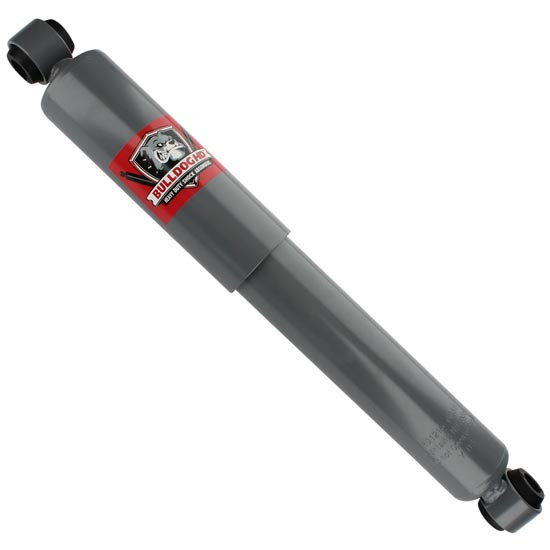
Bulldog HD Front Shock Absorber For PACCAR W990, 330, 357, 362, 378, 379, 384, 385, 386
BULLDOG HD SHOCKS
$62.99HD Shock Absorber Replaces 2021459, 306444C91, 308646C91, 308668C92, 308669C91, 320444C91, 329316C92Find premium shock replacements for your truck at 4 State Trucks. We carry these front Bulldog...29-050000023- SKU:
- 29-050000023
- Truck Class:
- Heavy Duty
- Length Options:
- 20 Inch
- Make:
- Peterbilt
- Make:
- Kenworth
- Product Type:
- Frame & Chassis
$62.99Qty in Cart: 0Price:$62.99Subtotal: -
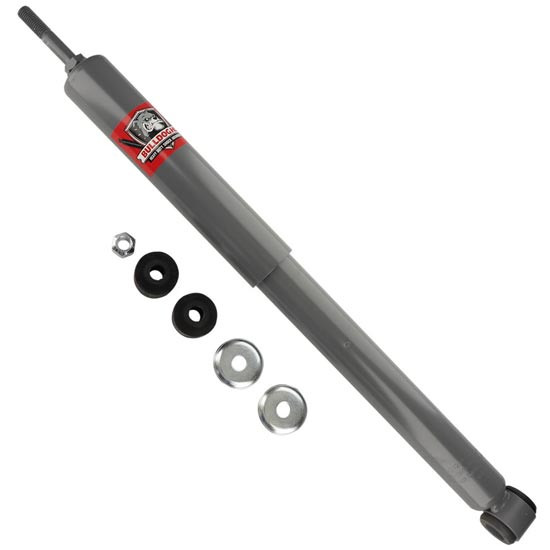
Bulldog HD Rear Shock Absorber 10.87 Replaces 03-05106, 03-05384, 03-06084 For Peterbilt 330, 362, 377, 378, 379, 386, 387 & 587
BULLDOG HD SHOCKS
$52.99Heavy Duty Shock Absorber Fits Peterbilt 330, 362, 377, 378, 379, 386, 387 & 587 Replaces 03-05106, 03-05384, 03-06084Bulldog HD shocks are fleet tested and approved. This is a premium rear...01-050000009- SKU:
- 01-050000009
- Product Type:
- Frame & Chassis
- Truck Class:
- Heavy Duty
- Length Options:
- 27 Inch
- Make:
- Peterbilt
- Location:
- Made In USA
- Ready To Ship:
- Yes
$52.99Qty in Cart: 0Price:$52.99Subtotal: -
FREE SHIPPING OVER $249

Gabriel Steer & Drive Shock Absorber Upgrade Replaces 85311, 56101Z1030, 56101Z2000 For Peterbilt W/ Air Leaf & Air Trac Suspension
GABRIEL
$69.99Fleetline Steer & Drive Shock AbsorberImprove ride quality and suspension control on your Peterbilt with the Gabriel Shock Absorber, engineered to replace 85311, 56101Z1030, and 56101Z2000. Designed...01-050020- SKU:
- 01-050020
- Truck Class:
- Heavy Duty
- Length Options:
- 24 Inch
- Size Options:
- 9 Stroke
- Product Type:
- Frame & Chassis
- Make:
- Peterbilt
- Ready To Ship:
- Yes
$69.99Qty in Cart: 0Price:$69.99Subtotal: -
FREE SHIPPING OVER $249

Aluminum Front Shock Bracket For Peterbilt COE & Conventional Replaces 02-01782, 13003AA & B63-6000
AUTOMANN USA
$86.99Aluminum Front Shock Bracket Replaces 02-01782, 13003AA & B63-6000 Fits Peterbilt COE & ConventionalUpgrade your truck's suspension system with the Aluminum Front Shock Bracket, a durable replacement...01-051030- SKU:
- 01-051030
- Product Type:
- Frame & Chassis
- Truck Class:
- Heavy Duty
- Material Options:
- Aluminum
- Make:
- Peterbilt
$86.99Qty in Cart: 0Price:$86.99Subtotal: -

BESTfit Aluminum Shock Hanger Replaces C1-11126 For Peterbilt Air Trac
BESTFIT TRUCK PARTS
$171.99BESTfit Aluminum Shock Hanger Fits Peterbilt With Air Trac SuspensionsThe BESTfit Aluminum Shock Hanger is a premium replacement part designed to fit a wide range of Peterbilt models. Made from...01-051027- SKU:
- 01-051027
- Truck Class:
- Heavy Duty
- Material Options:
- Aluminum
- Make:
- Peterbilt
- Product Type:
- Frame & Chassis
$171.99Qty in Cart: 0Price:$171.99Subtotal: -

Bulldog HD Rear Shock Absorber 8.9 Stroke Replaces 03-04629, 03-07281, 03-07421 For Peterbilt
BULLDOG HD SHOCKS
$64.99Heavy Duty Shock Absorber Fits Peterbilt 330, 335, 359, 362, 375, 377, 378, 379, 386, 389, 567 & 587Bulldog HD shocks are fleet tested and approved. This is a premium rear replacement shock...01-050000005- SKU:
- 01-050000005
- Product Type:
- Frame & Chassis
- Truck Class:
- Heavy Duty
- Length Options:
- 23 Inch
- Make:
- Peterbilt
- Ready To Ship:
- Yes
$64.99Qty in Cart: 0Price:$64.99Subtotal: -

Bulldog HD Rear Shock Absorber 10.12 Stroke Replaces 03-05106, 03-05384, 03-06084 For Peterbilt
BULLDOG HD SHOCKS
$67.99Heavy Duty Shock Absorber Fits Peterbilt 330, 362, 375, 377, 378, 379, 386, 387 & 587Bulldog HD shocks are fleet tested and approved. This is a premium rear replacement shock reengineered to be...01-050000007- SKU:
- 01-050000007
- Length Options:
- 27 Inch
- Truck Class:
- Heavy Duty
- Product Type:
- Frame & Chassis
- Make:
- Peterbilt
- Ready To Ship:
- Yes
$67.99Qty in Cart: 0Price:$67.99Subtotal: -
FREE SHIPPING OVER $249

Gabriel Shock Absorber Replaces 85069, 661400, 66584440Y For Peterbilt & Kenworth
GABRIEL
$71.99Gabriel 85069 Shock AbsorberMaintain superior ride control on your Peterbilt or Kenworth truck with this Gabriel Fleetline Shock Absorber, replacing OE numbers 85069, 661400, and 66584440Y. Designed...29-050017- SKU:
- 29-050017
- Length Options:
- 15 Inch
- Truck Class:
- Heavy Duty
- Size Options:
- 10 Stroke
- Make:
- Kenworth
- Make:
- Peterbilt
- Product Type:
- Frame & Chassis
$71.99Qty in Cart: 0Price:$71.99Subtotal: -
FREE SHIPPING OVER $249

Shock Bushing 1.5 Inch Od X 3/4 Inch ID
ENERGY SUSPENSION
$4.07Shock Bushing* High Quality Shock Bushing* Made Of Polyurethane* 1/2 Hour Glass, 1-1/2 Inch O.D. X 3/4 Inch I.D. * 4 Pieces* Pack Of 4, One Package Per Shock* Sold Individually* Made In USA* Warranty...29-050001- SKU:
- 29-050001
- Truck Class:
- Heavy Duty
- Location:
- Made In USA
- Diameter Options:
- 1 1/2 Inch
- Material Options:
- Plastic/Poly
- Make:
- Universal Items
- Product Type:
- Frame & Chassis
- Ready To Ship:
- Yes
$4.07Qty in Cart: 0Price:$4.07Subtotal: -
FREE SHIPPING OVER $249

Load-Share Shock Bolt With Shoulder Used In Front Air Ride Kits
LOAD-SHARE SUSPENSIONS
$60.99Shock BoltLooking for a reliable shock bolt for your front air ride kit or other projects? Check out our 3/4-inch Shock Bolt with Shoulder! It's the perfect fit for securely mounting shocks with ease...29-050007- SKU:
- 29-050007
- Width Options:
- 3/4 Inch
- Truck Class:
- Heavy Duty
- Make:
- Universal Items
- Product Type:
- Frame & Chassis
- Ready To Ship:
- Yes
$60.99Qty in Cart: 0Price:$60.99Subtotal: -

Shock Bolt Kit, 14.Inch Ride Heights - KIT11104 For Meritor
AUTOMANN USA
$16.18Shock Bolt Kit Replaces Kit11104* High Quality Shock Bolt Kit* Consists Of - (1) Cap Screw 3/4 Inch X 3-1/2 Inch - (1) Shock Bolt 3/4in -10 x 4-1/2in Lg - (2) Lock Nut 3/4in -10* 14.Inch Ride...09-05250038- SKU:
- 09-05250038
- Length Options:
- 3 1/2 Inch
- Material Options:
- Steel
- Truck Class:
- Universal
- Make:
- Universal Items
- Product Type:
- Frame & Chassis
$16.18Qty in Cart: 0Price:$16.18Subtotal: -

Bulldog Suspension Shock Front, Extended Length 26.85 Inch, Collapsed 16.61 Inch
BULLDOG HD SHOCKS
$42.33Front Suspension Shock Extended Length 26.85 Inch, Collapsed 16.61 InchRestore dependable steering response and ride quality with this high-quality Bulldog Front Suspension Shock designed for...09-05000005- SKU:
- 09-05000005
- Product Type:
- Frame & Chassis
- Style Options:
- Heavy Duty
- Length Options:
- 27 Inch
- Make:
- Universal Items
$42.33Qty in Cart: 0Price:$42.33Subtotal: -

1.5 Inch Shock Spacer, 2.25 In OD, 0.77 In ID
AUTOMANN USA
$9.251.5 Inch Shock Spacer Replaces A23645Maintain perfect suspension alignment with this reliable 1.5 Inch Shock Spacer. With a 2.25-inch OD, 0.77-inch ID, and 1.5-inch height, it strengthens your shock...09-05250083- SKU:
- 09-05250083
- Material Options:
- Brass
- Diameter Options:
- 3/4 Inch
- Truck Class:
- Universal
- Make:
- Universal Items
- Product Type:
- Frame & Chassis
$9.25Qty in Cart: 0Price:$9.25Subtotal: -
On SaleLimited Quantity Available

Monroe Magnum Shock Absorber For Drive Axle Suspension W/ Flex Air & AG380 Suspension
OPP - ORIGINAL PARTS PROGRAM
Now: $25.67Was: $97.60Yellow Monroe Magnum Shock Absorber Fits Drive Axle Suspension W/ Flex AirChoose a reliable suspension replacement with this Monroe Magnum Shock Absorber for drive axle suspension. Made with a...29-050006- SKU:
- 29-050006
- Truck Class:
- Heavy Duty
- Material Options:
- Steel
- Make:
- Universal Items
- Ready To Ship:
- Yes
- Diameter Options:
- 5/8 Inch
- Color:
- Yellow
- Length Options:
- 30 1/2 Inch
- Product Type:
- Frame & Chassis
Now: $25.67Was: $97.60Qty in Cart: 0Price:Now: $25.67Was: $97.60Subtotal: -

Gabriel Shock Absorber Replaces 665763, B23548, S23548 For Hendrickson Trailer Suspension Systems
GABRIEL
$94.99Under Slung Style Replacement Shock Absorber* High Quality Shock Absorber* Sold Individually* Warranty On Shock Absorbers Against Defects In Workmanship & Material From Date Of Purchase*** High...09-050013- SKU:
- 09-050013
- Truck Class:
- Heavy Duty
- Make:
- Universal Items
- Product Type:
- Frame & Chassis
- Ready To Ship:
- Yes
$94.99Qty in Cart: 0Price:$94.99Subtotal: -
FREE SHIPPING OVER $249

Shock Bushing 1.75 Inch OD X 1 Inch ID - Pack Of 4
ENERGY SUSPENSION
$8.52Bushings For Shocks* High Quality Shock Absorber Bushings* Made Of Polyurethane * 1/2 Hour Glass, 1-3/4 Inch O.D. X 1 Inch I.D. * Pack Of 4, One Package Per Shock* Sold Individually* Made In USA*...29-050000- SKU:
- 29-050000
- Color:
- Red
- Truck Class:
- Universal
- Location:
- Made In USA
- Diameter Options:
- 1 Inch
- Material Options:
- Plastic/Poly
- Make:
- Universal Items
- Product Type:
- Frame & Chassis
- Ready To Ship:
- Yes
$8.52Qty in Cart: 0Price:$8.52Subtotal: -
On SaleLimited Quantity Available

Shock Absorber 1.63 Inch Bore Replaces 85000, 65416
OPP - ORIGINAL PARTS PROGRAM
Now: $12.08Was: $51.99Shock AbsorberThis shock absorber features a 1.63-inch bore and is a direct replacement for Monroe numbers 65416 and 66893, as well as Gabriel number 85000. It's designed to provide reliable...09-050002- SKU:
- 09-050002
- Truck Class:
- Heavy Duty
- Length Options:
- 12 Inch
- Make:
- Universal Items
- Product Type:
- Frame & Chassis
- Ready To Ship:
- Yes
Now: $12.08Was: $51.99Qty in Cart: 0Price:Now: $12.08Was: $51.99Subtotal: -
FREE SHIPPING OVER $249

Gabriel Shock Absorber 1.63 Inch Bore Replaces 85919, 65503
GABRIEL
$83.99Gabriel Fleetline Steer And Trailer Shock Absorber* High Quality Absorber * 1.63 Inch Bore* Collapsed Length 14.23 Inches* Extended Length 22.48 Inches* Sleeve Mounting* Sold Individually* Warranty...09-050004- SKU:
- 09-050004
- Truck Class:
- Heavy Duty
- Make:
- Universal Items
- Product Type:
- Frame & Chassis
$83.99Qty in Cart: 0Price:$83.99Subtotal: -

Bulldog HD Cab Shock Absorber Replaces 20-16755, 654812, R71-6005 For Peterbilt, Volvo
BULLDOG HD SHOCKS
$49.77Bulldog Heavy Duty Cab Shock Absorber Fits Peterbilt 335, 348, 365, 367, 379, 386 & Volvo WIABulldog HD Cab Shock Absorbers is a premium replacement part, isolating the cab from the frame to prevent...29-050000045- SKU:
- 29-050000045
- Truck Class:
- Heavy Duty
- Length Options:
- 9 Inch
- Make:
- Peterbilt
- Product Type:
- Frame & Chassis
$49.77Qty in Cart: 0Price:$49.77Subtotal: -

Gas SLX Adjustable Shock Absorber Replaces ACHF113 For Peterbilt And Volvo
AFTERMARKET
$89.99Gas SLX Adjustable Shock Absorber Fits Peterbilt And VolvoOptimize the ride and handling of your Peterbilt or Volvo with the Gas SLX Adjustable Shock Absorbe. Compatible with 12-gauge front axle air...29-050010- SKU:
- 29-050010
- Truck Class:
- Heavy Duty
- Make:
- Peterbilt
- Make:
- Volvo
- Product Type:
- Frame & Chassis
$89.99Qty in Cart: 0Price:$89.99Subtotal: -

Bulldog HD Front Shock Absorber 13.7 Compressed & 21.02 Inch Extended Length Replaces 02-03020, 665738 For Peterbilt 330
BULLDOG HD SHOCKS
$68.99Bulldog Shock Absorber Fits Peterbilt 330 1995-2010 Replaces 02-03020, 665738Find premium shock replacements for your truck at 4 State Trucks. We carry these front Bulldog Heavy Duty Shocks,...01-050000013- SKU:
- 01-050000013
- Product Type:
- Frame & Chassis
- Truck Class:
- Heavy Duty
- Length Options:
- 21 Inch
- Make:
- Peterbilt
$68.99Qty in Cart: 0Price:$68.99Subtotal: -
FREE SHIPPING OVER $249

Gabriel Gas SLX Adjustable Drive Shock Absorber Replaces 65400, 66428 For Peterbilt
GABRIEL
$83.99Drive Shock Absorber Fits PeterbiltOptimize your Peterbilt's performance with the Gabriel GAS SLX Adjustable Drive Shock Absorber, designed to replace OEM parts 65400 and 66428. This heavy-duty shock...01-0500003- SKU:
- 01-0500003
- Truck Class:
- Heavy Duty
- Material Options:
- Steel
- Make:
- Peterbilt
- Product Type:
- Frame & Chassis
- Length Options:
- 27 Inch
$83.99Qty in Cart: 0Price:$83.99Subtotal: -

Shock Spacer - 1.5 In OD, 0.81 In ID For Hendrickson Turner
AUTOMANN USA
$5.67Shock Spacer Replaces E11831, A20913* High Quality Shock Spacer* 1 1/2 In OD * 0.810 Inch ID* 1.15625In Thickness* Sold Individually * Warranty On Shock Spacers Against Defects In Workmanship &...09-05250082- SKU:
- 09-05250082
- Diameter Options:
- 1 1/2 Inch
- Truck Class:
- Universal
- Material Options:
- Steel
- Make:
- Universal Items
- Product Type:
- Frame & Chassis
$5.67Qty in Cart: 0Price:$5.67Subtotal: -

Gabriel Fleetline Steer Shock Absorber 13.51 Collapsed & 20.78 Inch Extended Length Replaces 85989, B716020 For Peterbilt
GABRIEL
$114.99Steer Shock Absorber W/ Upper & Lower Eyelet Mount Fits Peterbilt Replaces 85989, B716020Enhance your Peterbilt's steering control and ride comfort with the Gabriel Fleetline Steer Shock Absorber,...01-0500002- SKU:
- 01-0500002
- Truck Class:
- Heavy Duty
- Material Options:
- Steel
- Make:
- Peterbilt
- Product Type:
- Frame & Chassis
$114.99Qty in Cart: 0Price:$114.99Subtotal: -

Gabriel Fleetline Steer & Drive Shock Absorber Replaces 65113, 65177, 65434
AFTERMARKET
$86.99Steer & Drive Shock Absorber Fits Ford, International, Isuzu, Peterbilt* High Quality Drive Shock* Extended Length 21.02 Inch* Collapsed Length 13.23 Inch* Sold Individually* Warranty On Drive Shocks...29-0500020- SKU:
- 29-0500020
- Truck Class:
- Heavy Duty
- Material Options:
- Steel
- Make:
- Chevrolet
- Make:
- International
- Make:
- Trailer
- Make:
- Bus
- Make:
- GMC
- Make:
- Peterbilt
- Make:
- Freightliner
- Make:
- Kenworth
- Make:
- Ford
- Make:
- Isuzu
- Product Type:
- Frame & Chassis
$86.99Qty in Cart: 0Price:$86.99Subtotal: -

Gabriel Shock Absorber 1.63 Inch Bore Replaces 66627, 5045
AFTERMARKET
$52.99Gabriel Fleetline Trailer Shock Absorber 10.11 - 14.52 InchThe Gabriel Fleetline Trailer Shock Absorber is designed to fit various trailer suspension systems, including Hendrickson, Neway Holland,...09-050006- SKU:
- 09-050006
- Truck Class:
- Heavy Duty
- Make:
- Universal Items
- Product Type:
- Frame & Chassis
- Ready To Ship:
- Yes
- Type Options:
- Sleeve Mount
- Length Options:
- 14 1/2 Inch
$52.99Qty in Cart: 0Price:$52.99Subtotal: -

Rear Upper Shock Bracket Chalmer
AFTERMARKET
$71.99Chalmers Upper Shock Bracket Replaces 800154. 3516765C1Keep your Chalmers suspension aligned with the Rear Upper Shock Bracket. Measuring 2.5 inches center-to-center, it ensures an exact fit for...29-05100277- SKU:
- 29-05100277
- Material Options:
- Steel
- Truck Class:
- Universal
- Make:
- Universal Items
- Product Type:
- Frame & Chassis
$71.99Qty in Cart: 0Price:$71.99Subtotal: -

Shock Spacer - 1 1/2 In OD, 3/4 In ID For Hendrickson Turner
AUTOMANN USA
$6.340.78 Inch Tall Shock Spacer* High Quality Shock Spacer* 3/4 Inch ID* 1.5In OD * 0.78 Inch Height * Sold Individually * Warranty On Shock Spacers Against Defects In Workmanship & Material From Date Of...09-05250081- SKU:
- 09-05250081
- Material Options:
- Brass
- Diameter Options:
- 3/4 Inch
- Truck Class:
- Universal
- Make:
- Universal Items
- Product Type:
- Frame & Chassis
$6.34Qty in Cart: 0Price:$6.34Subtotal: