


What PSI Should Semi Truck Tires Be?
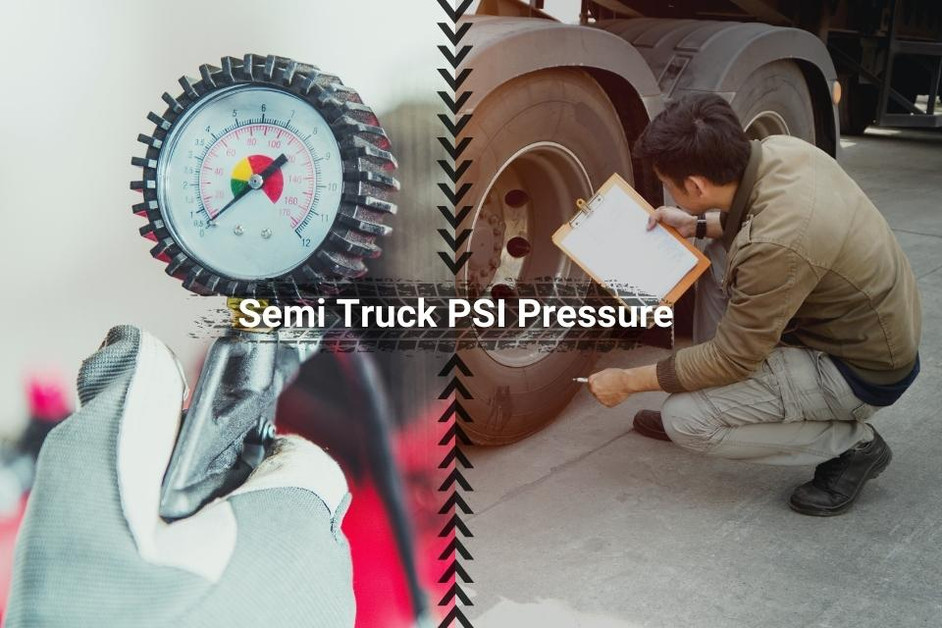
Getting the right tire inflation pressure on your semi-truck can prevent underinflation (wearing down the tires and increasing rolling resistance) and overinflation (blowout on the side of the road).
Adding the appropriate amount of air pressure to your big rig will keep you and other motorists safe.
To find the correct PSI for your tires, check your owner’s manual, or find it on the commercial vehicle’s tire placard.
The number is based on various factors, like:
- Weight on the truck
- Size and type of tires
- Common use of vehicle (class 5 - commercial work, class 7 - heavy duty, or Class 8 -semi)
Recommended PSI for a Semi Truck
For a fully loaded, commercial semi-truck:
- Front Tires: 100-130 PSI
- Rear Tires: 85-120 PSI
Dangers of Incorrect Tire Air Pressure
The incorrect amount of air pressure can affect:
- Carcass strength
- Stability and grip
- Resistance to curb or road impacts
Underinflated Tires
22 PSI or less.
It increases the risk of a tire blowout at high speeds due to heat buildup, and uneven wear on the tire’s outer edge. You also run the risk of irreversible internal damage to the tire, and hydroplaning risk due to reduced handling and stability.
Overinflated Tires
Cold tire pressure shouldn’t be 145 PSI or more.
Overinflated tires, even if it’s just 10 to 20 PSI over the normal pressure range – can result in higher rolling resistance, which is less fuel-efficient (higher fuel costs). This leads to uneven, rapid deterioration of tire tread and the increased risk of a blowout. The air in your tires heats and expands while on the road.
Tire Blowout Prevention Tips
- Maintain recommended pressure.
- Check PSI cold, not after tires have been running on the road.
- Inspect tread, rotation, and alignment.
How the Right PSI Amount Extends Your Tire Lifespan
Correct tire pressure extends the lifespan of your semi truck tires, resulting in added safety, fewer roadside emergencies, and lower maintenance costs. You get to extend your tire life.
Breaking Down the Basics of Semi Truck Tire PSI
What is PSI?
PSI (pounds per square inch). It’s how we measure air pressure in the tire.
Why does air pressure matter? It directly impacts how well you handle the truck, smoother braking, and stronger fuel economy.
Follow the manufacturer’s number? It’s an accurate way to find the correct PSI for your specific tire size/brand.
Visual inspections, like “thumping” the tire, aren’t good enough. You need an air pressure gauge for accurate PSI level analysis.
Always confirm with the manufacturer’s specifications and tire load charts for your exact truck and tire type.
Factors That Influence the Right Tire Pressure
Load weight & distribution: fully loaded vs. partial loads.
A fully loaded big rig needs a higher PSI because if the weight isn’t spread evenly, one tire can do more work than the other which leads to faster wear and tear and replacement.
The pressure on the same side of the axle can’t be uneven, otherwise your tires wear down too quickly.
Temperature changes: hot tire vs. cold tire readings.
Air expands in the heat and shrinks in the cold. Seasonal shifts significantly affect your readings, which is why it’s critical to check your tires cold (before running on the highway).
A tire that looks fine in the afternoon sun might be dangerously underinflated after a freezing night in a Joplin parking lot.
Road conditions & terrain: highway vs. rough routes.
Rough terrain from a job site or backroad heats up your tires more than a smooth highway.
Tire type & size: different tires, different ranges.
Not all tires are the same. A steer tire doesn’t have the same PSI as a wide-based drive tire. So, check the sidewall or the spec chart for the right number for your tire.
The Best Tools and Tech to Keep PSI in Check
Tire Pressure Monitoring Systems (TPMS):
Take all the guesswork out of tire pressure with a TPMS kit for your commercial truck. Get real-time PSI and temperature readings to address underinflation or overinflation issues before they cause problems.
Automatic Tire Inflation (ATI) Systems:
Automatically keeps tires at the optimal pressure while driving. ATI systems are perfect for bigger fleets or long-haul owner-operators.
Digital Tire Pressure Gauges:
Gauge your air pressure reliably by upgrading to a digital air pressure gauge.
You can also use a tire pressure monitoring valve stem. These are really easy to use. You just inflate to the correct PSI level and twist on the LED capsule. If your tire pressure drops 5-10 pounds, you'll see the red LED light flash.
Tire Valve Extensions / Caps:
Save time on dual tire checks with Real Wheels aftermarket valve extensions for your semi-truck.
Be well prepared for a potential roadside emergency fix with a tire repair kit or plug kit. Have at least one quick fix hose repair kit (NTA) to backup your air hoses should they leak or rupture. And throw in a pair of wheel chocks and safety triangles to keep safe while you’re pulled to the side of a busy highway.
Extra Maintenance Practices That Impact PSI Levels
- Perform regular tire rotations to prevent uneven wear
- Alignment and tire balances to extend tire life
- Inspect the air hoses and gladhands for leaks to keep your air system sealed
Throw in mud flap hangers and guards to help protect your tires from debris. For tire protection and extra style, consider throwing in a full-radius fender for your big rig.
Add an air hose and gladhand repair kit, or a replacement/backup option, to avoid unexpected pressure loss.
Upgrade your wheel’s looks while maintaining some protection with aluminum or chrome hub covers and wheel covers.
How Often Should Semi Truck Tire Pressure Be Checked?
Tire maintenance is a critical aspect of safety inspections.
- Daily pre-trip PSI checks.
- After long hauls or big temperature swings.
- At least once a week with a calibrated gauge.
Keep Your Rig Rolling with the Right PSI & Aftermarket Tools
Experience stronger fuel economy, fewer breakdowns, and great tire longevity that comes with adding the right PSI to your truck tires.
Remember to follow the manufacturer’s instructions for your truck model; stay proactive with good tire maintenance; use quality aftermarket tools like TPMS, ATI, and pneumatic dashboard gauges for easy, accurate monitoring.
Find everything you need to monitor your big rig at 4 State Trucks.
Recent Posts
-
Top 5 Chrome Upgrades from Trux Accessories
 Trux Accessories is best known for crafting unique LED lighting solutions, but they also feature a w …3rd Apr 2026
 -
Are BESTfit Fuel Tanks the Most Durable Budget Diesel Tank?
 BESTfit crash repair replacement parts are known for their affordability and exceptional build quali …31st Mar 2026
 -
19 Places to Put Watermelon Lights on Your Truck
 There hundreds of ways to customize your big rig with watermelon lights. These cab/marker lights can …27th Mar 2026
 -
Semi Truck Steering Wheel Style Guide for Owner-Operators
 Looking for the perfect steering wheel design to accentuate your cab’s theme? Here’s everything you …20th Mar 2026
 -
Haul of Fame: Workin’ Man Blues — Bryan Martin’s 1987 Peterbilt 359 Reborn
 In the world of classic trucking, some rigs simply haul freight—while others become legends on the r …20th Mar 2026
 -
Vendetta Cleaning Products (Why Truck Owners Should Use Them)
 Vendetta’s lineup of cleaning products offers drivers an affordable and accessible way to clean thei …19th Mar 2026
 -
5 Semi Truck Spring Cleaning & Maintenance Tips for Owner-Operators
 Cold winter weather can take its toll on semi truck parts. The spring season offers the perfect oppo …13th Mar 2026
 -
I-65 Chrome Shop Becomes an Authorized Dealer of 4 State Trucks: Expanding Access to Semi Truck Parts in Indiana
 Owner-operators, fleets, and repair shops across the Midwest now have expanded access to one of the …10th Mar 2026
 -
A Handshake Across the Border: 4 State Trucks Expands into Canada with Soaring Eagle
 In trucking, growth doesn’t just happen in boardrooms. It happens in shops. On backroads. In early-m …9th Mar 2026
 -
Two Family Businesses, One Goal: Taking Care of Truckers
 In trucking, reputation isn’t built overnight. It’s built mile after mile, handshake after handshake …6th Mar 2026