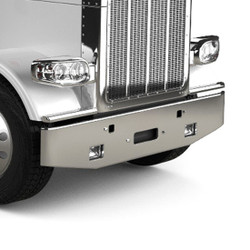
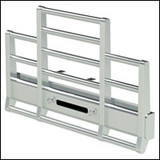
Aftermarket Peterbilt 388 bumpers, bumper flip kits, and protective grille guards offer incredible long-term value and security to your rig. Finding the right bumper style and material can accentuate your truck's aesthetic. And with the right lighting cutouts, it can offer you an amazing avenue for unique aftermarket customization.
You can try pairing together blind-mount stainless steel or aluminum bumpers with your
Peterbilt 388 hood trim or various other
exterior accessories for the Pete 388 model to get that perfect look. Adjust your truck's look to your heart's content by selecting the perfect style options to complete your creative vision, be it a rugged Texas square or box-end bumper, or a smooth rolled-end bumper for a polished look. Aerodynamic bumpers can also upgrade the driving performance of your commercial truck, alongside true performance upgrades like
replacement frame & chassis components.
This product lineup isn't just about style, it's about functionality. Investing some money into a flip kit and a heavy-duty grille guard to match can prevent costly damage to your rig on sharp inclines.
Frequently Asked Questions About Peterbilt 388 Bumpers
What years and models are compatible with Peterbilt 388 bumpers?
Peterbilt 388 bumpers are specifically designed for model years 2006-2015. While the 388 shares similarities with the 389 model, bumpers are not directly interchangeable between these models due to mounting bracket differences and hood clearance variations. Always verify your truck's exact model year and OEM before ordering, as mid-year production changes can affect fitment.
What's the difference between chrome, stainless steel, and aluminum bumper options?
Chrome-plated steel bumpers offer a mirror finish but require regular maintenance to prevent rust and pitting. Stainless steel bumpers (typically 304 grade) provide excellent corrosion resistance and maintain their appearance with minimal upkeep, though they cost 20-30% more. Aluminum bumpers are the lightest option, reducing front-end weight by 40-60 pounds, but may show scratches more easily and typically come with a brushed or polished finish rather than chrome.
How difficult is the installation process, and what tools are required?
Installation typically takes 2-4 hours for experienced mechanics or 4-6 hours for DIY installers. You'll need a socket set (including 3/4" and 7/8" sockets), torque wrench, jack stands or lift access, and potentially a second person for positioning. Most aftermarket bumpers use existing mounting holes, but some may require minor drilling. Common challenges include aligning fog light wiring harnesses and ensuring proper clearance with aftermarket grilles or hood modifications.
Will aftermarket bumpers affect my warranty or DOT compliance?
Quality aftermarket bumpers that meet FMVSS standards will not void your warranty when properly installed. Look for bumpers certified to meet DOT requirements for impact resistance and reflector placement. Be aware that some heavily modified or custom bumpers may not include proper license plate mounting provisions or required reflector locations, which could result in inspection failures or citations.
What's included with the bumper, and what additional parts might I need?
Most bumpers come as the shell only, without brackets, bolts, or accessories. You'll typically need to purchase separately: mounting brackets (if not reusing OEM), grade 8 mounting bolts, fog light brackets or delete plates, tow hook provisions, and any chrome or stainless steel end caps. Budget an additional $150-300 for these components. Some premium bumpers include basic mounting hardware, but always confirm what's included before ordering to avoid installation delays.