The Kenworth W900A Frame & Chassis product lineup offers a wide range of essential structural components and hardware for the popular W900A semi-truck model. This product lineup includes a comprehensive selection of frame parts, suspension components, air ride systems, fuel tanks and related accessories. Whether you need to repair or upgrade your W900A's frame or suspension, this product lineup has you covered with high-quality, durable parts from trusted brands.
Standout features of this product lineup include a robust selection of frame-related items like frame light bars, filler panels, and nut covers to enhance both functionality and appearance. The air ride and suspension parts, including air springs, shock absorbers, and leaf springs, ensure a smooth, stable ride.
Explore our complete W900A selection with top-notch
Kenworth W900A tool boxes,
Kenworth W900A mud flaps and
Kenworth W900A fuel tanks. With a focus on quality, compatibility, and easy installation, this Kenworth W900A product lineup is a one-stop shop for maintaining the structural integrity and performance of your semi-truck.
Frequently Asked Questions About Kenworth W900A Frame & Chassis
What years and models are compatible with W900A frame and chassis parts?
W900A frame and chassis components are specifically designed for Kenworth W900A models produced from 1961 to 1985. However, many parts are also compatible with W900B models (1985-1987) and certain W900L models, particularly suspension and crossmember components. Always verify your truck's OEM and model year before ordering, as there were running changes throughout production. Early models (1961-1975) may have different frame rail spacing and mounting hole patterns compared to later models (1976-1985).
What are the most common installation challenges when replacing frame rails or crossmembers?
The primary challenges include ensuring proper alignment of cab and hood mounting points, which often requires professional measurement tools and expertise. Frame rail replacement typically requires complete disassembly of the truck, including removal of the cab, engine, and all mounted components. Crossmember installation can be complicated by rust or damage to existing mounting holes. We recommend having at least 20 hours of labor budgeted for frame rail work and using grade 8 bolts with proper torque specifications. Many customers report that aftermarket frame rails may require minor drilling or modification of mounting holes.
What material grades and thicknesses are available for replacement frame rails?
Replacement frame rails are typically available in heat-treated steel with yield strengths of 80,000 PSI or 110,000 PSI. Standard thicknesses range from 5/16 inch to 3/8 inch, with heavy-duty applications using 7/16 inch rails. The original W900A specifications called for 5/16 inch rails for standard applications and 3/8 inch for heavy-haul configurations. Most aftermarket suppliers offer rails in bare steel that requires priming and painting, though some premium options come with powder coating or e-coating for corrosion resistance.
How do I identify which suspension type my W900A uses for replacement parts?
W900A trucks came with several suspension options including Hendrickson walking beam, Neway air ride, and various spring configurations. Check the identification tag on your existing suspension components or look for casting numbers on spring hangers and torque arms. Walking beam suspensions will have a central pivot point and tandem axle configuration, while air ride systems feature air bags instead of leaf springs. Spring suspensions can be identified by counting leaf spring packs - standard configurations used 8-10 leaf packs for 38,000-46,000 lb capacity.
What crossmember styles are available and which is best for my application?
Common crossmember styles include C-channel (standard duty), boxed beam (heavy duty), and tubular (weight savings). C-channel crossmembers are suitable for most highway applications and are easier to modify for accessory mounting. Boxed beam designs offer superior strength for vocational trucks and heavy-haul applications but are more difficult to drill or modify. Tubular crossmembers save 15-30 pounds per piece but may not accommodate all mounting brackets. Consider your GVWR, typical loads, and any auxiliary equipment mounting needs when selecting crossmember style.




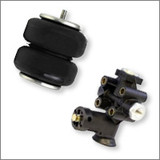 Kenworth W900A Air Springs & Level Valves
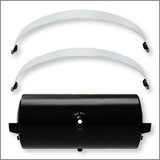 Kenworth W900A Air Tanks, Wraps & Mounting
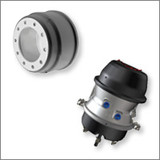 Kenworth W900A Brake Parts & Acc.
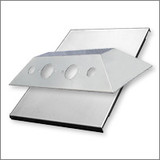 Kenworth W900A Deck Plates & Air Line Boxes
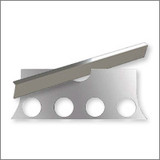 Kenworth W900A Frame Light Bars & Filler Panels
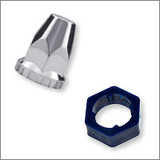 Kenworth W900A Frame Nut Covers
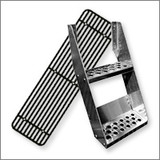 Kenworth W900A Frame Steps & Acc.
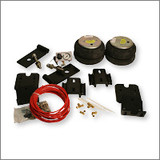 Kenworth W900A Front Axle Air Ride Kits
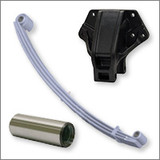 Kenworth W900A Leaf Springs, Hangers & Acc.
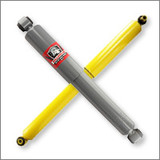 Kenworth W900A Shock Absorbers
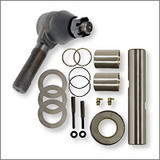 Kenworth W900A Steering Parts & Acc.
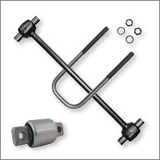 Kenworth W900A Torque Rods & U-Bolts