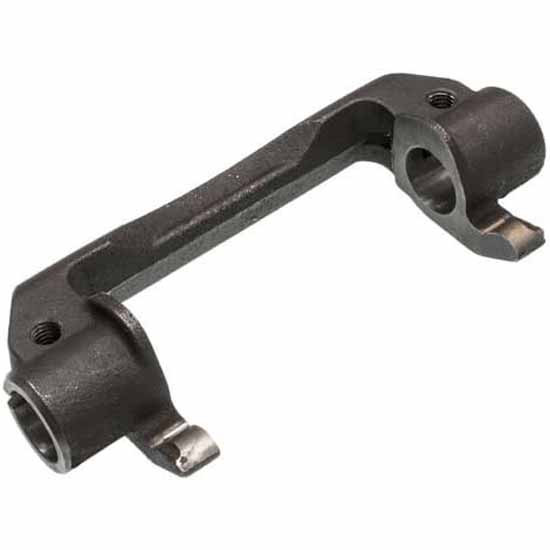
Supercharge your semi-truck drivetrain with the Freightliner FLC112! This versatile product lineup offers a wide range of high-quality replacement parts to keep your Freightliner running at peak performance. Enhance your truck's power and efficiency with premium differential pinion nuts, universal joints, and U-joint kits. Maintain optimal braking with camshaft repair kits and differential pressure sensors. Stay safe on the road with stainless steel lift axle panels and DPF sensors. Whether you're upgrading your drivetrain or simply need a reliable replacement part, the Freightliner FLC112 Drivetrain product lineup has you covered. Trust these durable, OEM-quality components to maximize your Freightliner's performance and keep you moving down the highway with confidence.
Frequently Asked Questions About Freightliner FLC112 Drivetrain Parts
What drivetrain components are most commonly replaced on the FLC112, and how often?
The most frequently replaced drivetrain parts on the FLC112 include U-joints (typically every 100,000-150,000 miles), clutch assemblies (200,000-300,000 miles depending on driving conditions), and carrier bearings (150,000-200,000 miles). Driveshaft center support bearings and yokes also require regular attention. Heavy-duty applications and frequent stop-and-go driving will require more frequent replacements. We recommend inspecting U-joints every 50,000 miles and checking for play in the driveshaft components during regular maintenance.
Will aftermarket driveshafts and U-joints fit my specific FLC112 model year?
Fitment depends on your specific FLC112 configuration, including engine type, transmission model, and wheelbase. Models from 1988-1995 typically use 1350 or 1410 series U-joints, while 1996-2003 models may use 1480 or 1550 series depending on the application. Always verify your driveshaft length, spline count, and U-joint series before ordering. Key measurements include the distance from transmission yoke to rear axle input, shaft diameter, and whether you have a two-piece or three-piece driveshaft system. Contact us with your OEM for exact fitment verification.
Can I upgrade to heavy-duty drivetrain components, and what are the benefits?
Yes, upgrading to heavy-duty components is common for FLC112s used in demanding applications. Popular upgrades include switching from 1350 to 1410 series U-joints, installing greaseable U-joints instead of sealed units, and upgrading to forged yokes. Heavy-duty carrier bearings with improved sealing can extend service life by 30-50%. These upgrades are especially beneficial for trucks running increased horsepower, hauling heavy loads, or operating in severe conditions. Ensure your transmission output and differential input can accommodate larger series components before upgrading.
What tools and expertise are needed to replace drivetrain components myself?
Basic driveshaft service requires a U-joint press or heavy-duty vise, snap ring pliers, hammer, and appropriate sockets. Driveshaft removal typically needs basic hand tools and jack stands. However, proper driveline angle measurement requires an angle finder, and balancing may be necessary after U-joint replacement. Many FLC112 owners successfully replace U-joints and carrier bearings themselves, but complete driveshaft replacement or rebuilding often requires professional balancing equipment. Always mark driveshaft orientation before disassembly to maintain factory balance.
How do I identify which transmission and differential I have for ordering the correct parts?
Check the transmission tag on the driver's side for model identification - common FLC112 transmissions include Eaton Fuller 9, 10, 13, and 18-speeds, with specific model numbers like FRO-14210B or RT-11609A. Rear differentials are typically Rockwell, Eaton, or Dana Spicer units with ratios ranging from 3.55 to 5.29. The differential tag is usually on the front face of the housing. Your OEM's 7th digit indicates engine type, which helps determine likely drivetrain configuration. Build sheets from Freightliner can provide complete specifications if tags are missing or illegible.