
How to Buy the Right Peterbilt 379 Radiator
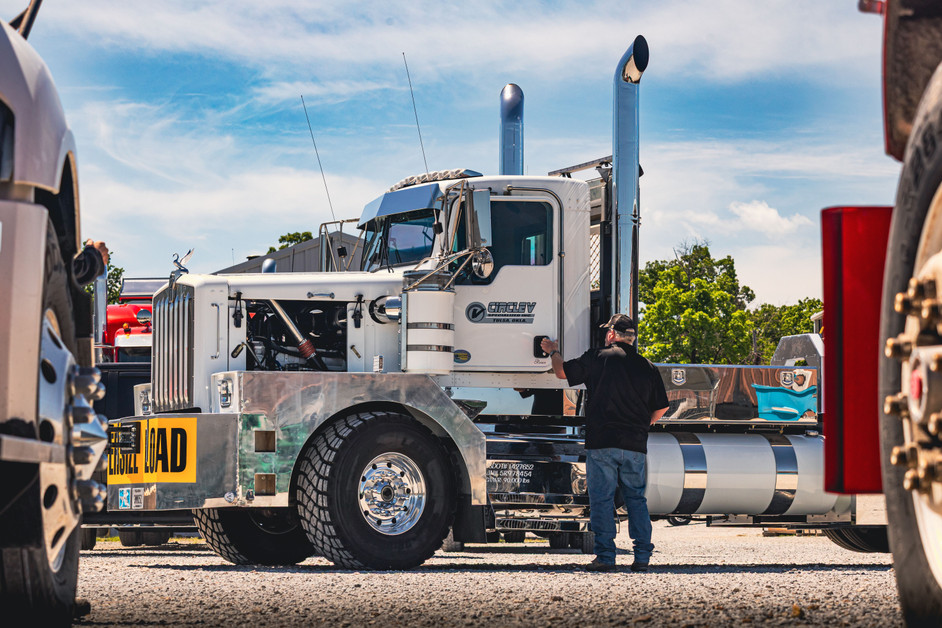
If you want to keep your diesel engine from overheating you need a well-functioning replacement Peterbilt radiator to properly carry the hot coolant through small passages, transfer engine heat into the air, and return cooled fluid to the engine.
7 Factors to Consider Before Buying a Peterbilt Radiator
- Correct Fitment
- Cooling Capacity
- Core Construction
- Airflow/Core Design
- Durability
- Serviceability
- Price
Peterbilt 379 Radiator Fitment Identification
| Application | Main Identifying Features |
|---|---|
| Older 379 Likely 1987/1988 to 1994 |
Z- or L-shaped side brackets with a front-offset mounting pattern. |
| 1994 to 2004 | C- or U-channel side mounting with a single stud and front-offset mounting. |
| 2004 to 2007 | Remote coolant reservoir rather than a top radiator tank, generally with a front-offset mounting pattern. |
| 2006 | Special attention required. Some applications use a center mounting pattern rather than the typical offset arrangement. |
The 2006 Manufacturer Change
Back in 2006, Peterbilt changed the radiator mount position to center mount instead of an offset mount.
Ordering a standard 379 Peterbilt radiator for the 2006 model means the fan-to-radiator clearance won’t be enough.
Before you buy, verify:
- Bottom mounting and bolt pattern
- Radiator mounting position
- Engine
- Remote versus radiator-mounted surge tank
- Side bracket/channel design
- Core dimensions
- OEM or cross-reference number when available
Reversible lower connection: Some replacement Peterbilt 379 radiators feature a reversible or repositionable lower coolant connection. This lets you configure the lower hose outlet for the driver or passenger side, depending on the truck's original setup. Always follow the radiator manufacturer's instructions when changing the connection orientation.
Aftermarket Replacement Radiator Options
Once it goes bad, there are plenty of replacement Peterbilt radiators to choose from.
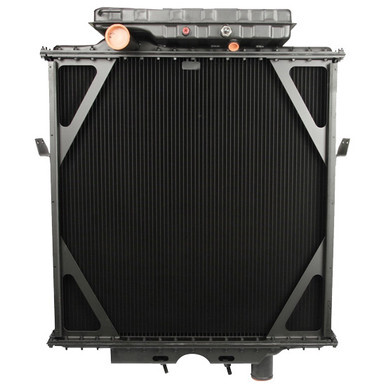
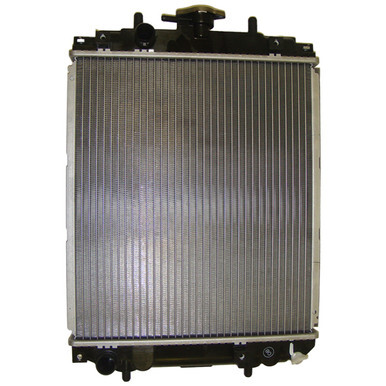
BESTfit heavy-duty radiators encompass the gambit of premium radiator kits and economical aluminum radiator replacements.
The absolute cheapest brands are going to be from China, like RAYTEN radiators.
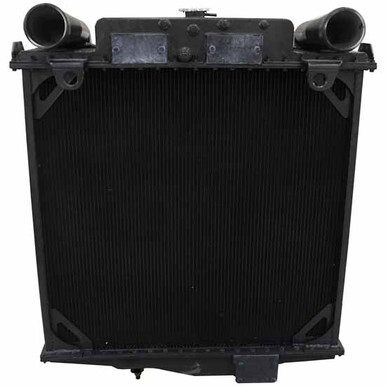
The luxury price points are found with US-based brands like PDI Big Boss Performance and CM Compressor A/C radiators which start at $3,000 and stretch towards $8,000 per unit.
Radiator Core Features That Affect Cooling
| Core Feature | Why It Matters |
|---|---|
| Fin Density | Determines available heat-transfer surface. |
| Tube Size | Affects coolant volume and heat-transfer area. |
| Tube Spacing | Influences airflow through the core. |
| Tube Design | Dimples or turbulators increase coolant mixing. |
| Core Thickness | Adds heat-transfer capacity but also airflow resistance. |
| Fin Design | Influences how efficiently heat transfers into passing air. |
| Airflow | Carries heat away from the radiator. |
Radiator Components Explained
| Radiator Component | What It Does | Why It Matters |
|---|---|---|
| Core | Main cooling section containing tubes and fins. | Transfers engine heat from coolant into outside air. |
| Coolant Tubes | Carry hot coolant through the core. | Tube size, number, and design affect coolant flow and heat transfer. |
| Fins | Thin metal surfaces attached to the tubes. | Increase surface area so passing air carries away more heat. |
| Header Plates | Join the coolant tubes to the radiator tanks. | Seal and support the tubes at each end of the core. |
| Radiator Tanks | Collect and distribute coolant entering and leaving the core. | Direct coolant evenly through the radiator tubes. |
| Inlet | Receives hot coolant from the engine. | Feeds heated coolant into the radiator. |
| Outlet | Sends cooled coolant back toward the engine. | Completes the coolant circulation loop. |
| Hoses | Connect the radiator with the engine and cooling system. | Carry coolant between major components. |
| Hose Clamps | Secure hoses to fittings and connections. | Prevent coolant leaks and hoses from coming loose. |
| Mounts & Brackets | Hold the radiator in position. | Control movement and isolate the radiator from damaging vibration. |
| Pressure Cap | Regulates cooling-system pressure. | Helps raise coolant's boiling point and releases excessive pressure. |
| Surge Tank | Provides space for coolant expansion and system filling. | Helps manage changing coolant volume as temperatures rise and fall. |
| Fan Shroud | Directs fan airflow through the cooling stack. | Helps the fan pull air through the radiator instead of around it. |
| CAC | Cools compressed intake air from the turbocharger. | Reduces intake-air temperature before air reaches the engine. |
| A/C Condenser | Removes heat from A/C refrigerant. | Sits in the cooling stack and affects airflow reaching the radiator. |
Radiator Fin Count
Most standard heavy-duty radiator cores use 16 to 18 fins per inch. It varies a lot by the brand/manufacturer.
More fins will help shed heat into the air, but they also increase airflow resistance and there is more opportunity for bugs, dirt, and debris to collect between the fins.
High-Efficiency Radiator Cores
An efficient radiator core helps to remove heat from the engine coolant through the tubes and fins.
Some radiator tubes use internal dimples or turbulators. These designs disrupt the speed of the coolant flow, giving it more time to cool down.
This is great for operating in high heating areas, running sustained engine loads, or climbing long, steep grades.
Radiator Rows
The rows are the number of coolant-tube layers running through the depth of the radiator core.
More rows means more room for additional coolant tubes and a broader heat-transfer surface area.
Higher row count doesn’t equate to stronger cooling capacity.
The radiator’s core geometry and operating conditions determine the engine cooling power.
Air gets hotter as it travels through the radiator – the first row getting the coldest air, the each subsequent row getting increasingly warmer air.
- 2 Rows: common in wide-tube aluminum designs, featuring lower weight and less airflow.
- 3 Rows: standard on most heavy-duty trucks due to balance of core depth and air flow.
- 4 Rows: heavy-duty copper-brass Peterbilt configurations
- 5 Rows: more depth and weight for older or high-load designs.
- 6+ Rows: specialized or severe-duty construction.
For most drivers, 3-rows work just fine. Here's why.
Crystal Miller drives a Peterbilt 379 model that she calls Whitey, which is spec’d at 650hp for pre-emissions 6NZ Caterpillar engine.
Like most big trucks that come straight out of the factory, it has a 3-core radiator setup.
She pulls over 175,000 pounds up steep mountain climbs across the American West Coast with ZERO overheating issues.
Choosing a Radiator Type
| Type | Best For | Main Advantage | Tradeoff |
|---|---|---|---|
| Plastic Tank / Aluminum Core | Highway trucks and stock replacements | Light and lower cost | Less repair-friendly |
| Steel Tank / Copper-Brass Core | Older trucks, long ownership, and severe-duty use | Repairable and heavy-duty | Heavier and more expensive |
| All Aluminum | Performance and selected replacement applications | Light with efficient wide tubes | Requires specialized repair |
Aluminum vs Copper-Brass
Aluminum is lightweight and affordable, common on most big rigs.
Copper-brass is heavier, more expensive, and long-lasting - ideal for vocational applications and vintage big rigs that endure long-haul drives.
For long-haul trucking, both function just fine.
Replacing Related Radiator Cooling Hardware
If you’re replacing a radiator set, it’s important to maintain the entire cooling system.
Vibration, heat cycles, restricted airflow, and poor coolant pH levels don't just wear down the radiator, but also related engine-cooling parts:
- Mounting Components
- Hoses
- Connections
- Coolant Pressure
- Coolant pH Levels
- Fan Shrouds
- CAC/Condenser
- Clamps
- Hoses
- Surge Tank
- Caps
How to Maintain Your Radiator
Preserve your radiator by simply washing it off.
Every so often, remove the radiator, hose off the bug guts, sludge, and debris, and re-insert it.
This simple habit helps preserve the radiator for longer work cycles.
Shop Peterbilt Engine-Cooling Truck Parts at 4 State Trucks
Filter for your specific make/model/year and find a wide availability of in-stock semi truck parts to keep your engine's cooling system well-maintained for years to come.
Recent Posts
-
Diesel Truck Engine Maintenance Guide
 Semi truck engines can last up to one million miles, or more, before they need to be rebuilt or repl …4th Sep 2026
 -
10 Essential Cost-Per-Mile Truck Upgrades that Pay for Themselves
 Small aftermarket semi truck accessories and performance upgrades save more money over time than the …21st Aug 2026
 -
Seasonal Semi Truck Maintenance Checklist
 Freezing winter weather temperatures, heavy snow, ice, and road salt take an unseen toll on your sem …14th Aug 2026
 -
Haul of Fame: Richard Bonner’s 1996 Peterbilt 379 — Bringing a Classic Trucker’s Truck Back to Life
 Every truck has a story, but some are worth taking a closer look at. Richard Bonner’s 1996 Peterbilt …14th Aug 2026
 -
Surviving the Scale: How to Pass Your DOT Inspection & Avoid Crippling Fees
 DOT semi truck inspections can make anyone nervous. There are multiple levels that start from a quic …7th Aug 2026
 -
Semi Truck Brake System Maintenance Guide
 Semi-truck brake defects account for 30% of out-of-service violations, according to CVSA’s 2025 Inte …4th Aug 2026
 -
How to Build a Semi Truck Emergency Kit (A Complete Checklist)
 Semi-truck breakdowns drain your wallet and your time, but they aren't inevitable. With the right em …30th Jul 2026
 -
How 4 State Trucks Helps Drivers Source Parts Without Costly Delays
 For an owner operator, every minute of downtime is costly, and a potentially business-ending scenari …24th Jul 2026
 -
Haul of Fame - Loud N Heavy: How Davis Brothers Designs Turned a Famous Show Truck Into a Legend of Its Own
 Davis Brothers Designs transformed a renowned Peterbilt 389 show truck into "Loud N Heavy," a functi …24th Jul 2026